
 By
Nadia Khalis on
December 26, 2025 at 9:48 am | Updated on January 6, 2026 at 7:04 am
By
Nadia Khalis on
December 26, 2025 at 9:48 am | Updated on January 6, 2026 at 7:04 am 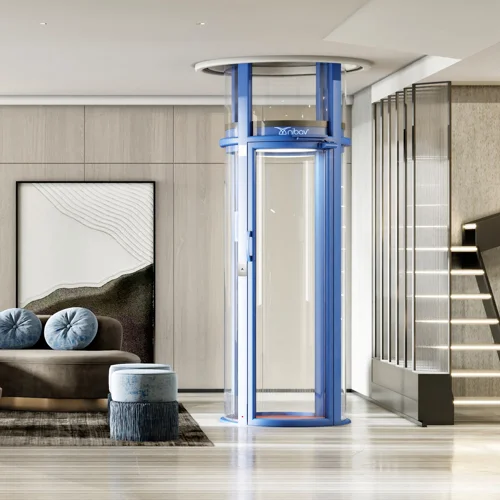
Step into a lift and you enter a century of refined engineering, rigorous safety science, and elegantly applied physics. This introduction distills the most compelling insights about residential elevators—their evolution, enabling technologies, and human-centred design. From panoramic cabins to whisper-quiet operation, we examine how modern systems transform vertical mobility while prioritizing family safety and comfort. Elevate your understanding of home elevators in Malaysia with a clear, expert overview tailored to contemporary living.
Table of Contents
- What Are Domestic Lifts?
- 10 Interesting Facts About Home Elevators
- 1) Home Elevators Are No Longer Just a Luxury
- 2) Modern Elevators Are Space-Saving
- 3) Residential Elevators Are Highly Customizable
- 4) Elevators Rank Among the Safest Ways to Travel
- 5) A Lift Can Enhance Home Value
- 6) Domestic Lifts Help Seniors Stay Independent
- 7) Energy-Efficient Options Are the New Default
- 8) Quieter Than You Think
- 9) Smart Controls Make Life Easier
- 10) Advanced Tech Behind the Scenes
- In Conclusion: Beyond Luxury—Practical, Safe, and Beautiful
- Future-Proof Your Home with a Nibav Residential Lift
What Are Domestic Lifts?
Domestic lifts—also called home elevators—are compact elevators designed specifically for residences. Unlike commercial systems adapted for houses, modern domestic lifts are purpose-built: space-efficient, quiet, and straightforward to install. They support accessibility for multigenerational living, simplify daily routines (groceries, luggage, laundry), and come in several formats, including air-driven (pneumatic) panoramic lifts, compact traction systems, and platform models. With tailored cabin finishes, smart controls, and minimal building work, a home lift can match your architecture while adding comfort, safety, and style. In short: they’re not just for mansions—they’re for real, everyday Malaysian homes.
10 Interesting Facts About Home Elevators
Lifts for homes are now attainable, efficient, and beautifully designed. Here’s why they’re not just for luxury estates anymore—especially across Malaysian cities and regions.
1) Home Elevators Are No Longer Just a Luxury
Ten years ago, a home elevator was seen as a luxury feature; today, it has become a practical and future-ready upgrade. Several trends are shaping this shift in Malaysia—narrow-lot terrace homes in Kuala Lumpur and Selangor, multigenerational living in cities like Johor Bahru and Penang, and multi-storey residences built to maximize urban land. With more people working from home and spending greater time indoors, the need for safe, convenient movement between floors has grown. Modern residential lifts are compact, stylish, and specifically engineered for homes rather than adapted from commercial buildings. For many Malaysian families—seniors, parents with young children, and homeowners planning for long-term comfort—home elevators are no longer extravagances, but everyday essentials.
What that means for you: An elevator can be a functional decision that supports independence, comfort, and future-proof living, while still fitting your aesthetic and floor plan.
2) Modern Elevators Are Space-Saving
The idea that a lift ‘takes up too much space†is no longer true. Compact cylindrical or near-cylindrical lift designs can fit neatly into stair voids, corners, or lightwells—often making use of awkward spaces that cannot accommodate furniture. With modern residential lift systems that require no pit and no machine room, homeowners don’t need to sacrifice a bedroom or reduce living areas. In fact, a thoughtfully positioned space-saving home lift can increase overall usability by allowing better planning of storage areas, utility rooms, or home offices across multiple levels.
Malaysian context: In dense urban areas such as Kuala Lumpur, Petaling Jaya, and Johor Bahru, where land is maximized through vertical living, compact home lifts help consolidate vertical movement while keeping interiors open, bright, and uncluttered.
3) Residential Elevators Are Highly Customizable
Design is personal—and your lift can be, too. Clear or smoked panoramic panels keep sightlines open and invite daylight through the home (many owners describe the cabin as a ‘vertical light wellâ€). Finishes range from neutral, minimalist tones to warm timber accents or metallic trims. Lighting options include ambient packages and ‘starlight†effects that shift the lift from equipment to a feature. Controls can be sleek and tactile or paired with smart readiness for app or voice call—whatever best fits your family’s habits.
Why this matters: A thoughtfully designed lift feels intentional, not clinical. It blends seamlessly with modern interiors in Kuala Lumpur condominiums, contemporary terrace homes in Selangor, or warm, earthy palettes found in Penang and Johor residences—enhancing the home’s character rather than disrupting it.
4) Elevators Rank Among the Safest Ways to Travel
Statistically, elevators are one of the safest forms of mechanical transport, and residential systems are engineered with layers of protection. Expect multi-point door interlocks that prevent movement unless closures are confirmed; obstruction and overload sensing that halts travel before issues arise; precision levelling for confident step-in/step-out; in-car lighting and ventilation for comfort; and powered-loss protocols that bring the cabin to the nearest landing in an orderly, controlled manner. Add an intercom or call device, and you have safety that’s designed in, not bolted on.
Takeaway: When you evaluate a home elevator price, look beyond the sticker—built-in safety and reliability are where true value lives.
5) A Lift Can Enhance Home Value
In markets that prize accessibility and multi-level living, a well-integrated home elevator can differentiate your property. Buyers increasingly value ‘age in place†potential, barrier-free movement, and high-quality finishes. While every sale is unique, agents routinely note that homes with lifts photograph better (panoramic cabins add drama and light), show more comfortably for older buyers, and can justify premium positioning. For owners not selling soon, the immediate dividend is day-to-day convenience and a home that genuinely serves the family.
Rule of thumb: Invest first in core specs (stops, capacity, safety), then in the visible elements (glazing, lighting, rails) that elevate presentation and enjoyment.
6) Domestic Lifts Help Seniors Stay Independent
Stairs can be daunting—particularly in winter or after an injury. A lift removes that barrier so grandparents, guests, and recovering family members can move independently between levels. Think of dinner parties that flow across floors, bedtime routines that don’t require supervision, and spontaneous visits that don’t leave someone waiting downstairs. For many Malaysians, the most profound benefit is dignity—mobility without asking for help.
Real-world example: In a three-storey townhouse, a compact cabin by the stair void keeps all bedrooms, living areas, and roof terraces accessible—no compromises, no detours.
7) Energy-Efficient Options Are the New Default
Energy prices and sustainability targets have sharpened focus on operating costs. Air-driven (pneumatic) lifts typically draw power primarily on ascent, then rely on balanced air pressure to descend, reducing energy use. Pair that behaviour with efficient drive components and LED lighting and you get a system tuned for everyday living. Just as important: there’s no hydraulic oil to change or dispose of—cleaner for your home and simpler for maintenance.
Bottom line: Efficiency keeps ongoing costs predictable. When you compare home elevator price quotes, ask about power profile and descent behavior—it adds up over years.
8) Quieter Than You Think
Modern residential lifts are designed for living rooms and bedrooms, not utility rooms. Refinements such as soft starts and stops, vibration damping, and acoustic insulation keep sound levels low—conversations continue and naps go undisturbed. Many owners remark that the ‘whoosh†of an air-driven system is softer than they expected—and far quieter than household appliances they already live with.
Result: You’ll notice the convenience far more than the noise.
9) Smart Controls Make Life Easier
From tactile call buttons to app readiness or voice assistance, control options are catching up with how families actually live. Call the lift from the next level while you carry shopping bags, restrict use when little ones are exploring, or check status without leaving the sofa. Thoughtful control design often speeds up adoption for older family members, too—large, well-lit buttons and clear indicators make daily use intuitive.
Tip: Choose controls that match your household’s comfort level today while leaving room for optional upgrades later.
10) Advanced Tech Behind the Scenes
The best ‘magic†is the tech you never see. Behind the cabin, robust control boards, sensors, and diagnostics keep things running smoothly; modular architecture makes service efficient; and self-supporting shafts simplify siting and installation. With fewer moving parts than legacy systems, modern lifts reduce wear, streamline upkeep, and support high uptime—exactly what you want from a core piece of home infrastructure.
Takeaway: When evaluating home elevators in Malaysia, ask how the system is engineered for serviceability. Predictable maintenance equals predictable comfort.
In Conclusion: Beyond Luxury—Practical, Safe, and Beautiful
Home elevators now address everyday needs—accessibility, safety, space efficiency, and design coherence—while fitting Malaysian homes and schedules. They don’t just move people; they improve homes, returning time and comfort to your day. As technology evolves, expect even more compact footprints, quieter rides, and smarter features to make vertical living effortless.
Planning Your Lift in Malaysia: A Clear, Simple Checklist
If you’re ready to explore, here’s a straightforward roadmap you can follow with your builder or directly with a lift specialist:
- Define the journey: How many levels (G+1, G+2, G+3)? Approximate travel height? Who will use it most (kids, seniors, guests)?
- Pick the position: Stair void, corner, or lightwell? Aim to preserve natural circulation and daylight.
- Match the cabin: Compact for minimal footprint; larger ‘Max†style if you want more room for comfort or frequent carrying.
- Choose a palette: Clear vs smoked panels, ambient vs starlight lighting, and hardware tones that complement flooring and joinery.
- Lock in the safety stack: Controlled descent during power loss, door interlocks, obstruction/overload sensing, child-lock, intercom, lighting, ventilation, and precision levelling.
- Map the logistics: Strata approvals (if applicable), lift-in route, working hours, staging areas, and dust control—especially if you’ll live through the install.
- Request an itemized proposal: Technical scope (stops, diameter), finishes, site readiness requirements, timeline, home elevator price, warranty terms, and after-sales plan.
- Stage payments sensibly: Link milestones to visible progress for mutual confidence.
- Plan handover & training: Everyone learns controls and emergency procedures on day one; keep quick-start guides handy.
- Schedule preventive service: Small, regular checks keep rides smooth, quiet, and dependable.
Future-Proof Your Home with a Nibav Residential Lift
Elevate daily life with Nibav Home Lifts Malaysia—purpose-built for residences. Our air-driven, panoramic lifts fit tight spaces, install cleanly (no pit, no machine room), and operate quietly and efficiently. Choose from elegant finishes and lighting options to match your interior, and enjoy safety that’s designed in from day one. Whether you’re renovating a beloved family home or designing a new multi-storey build, Nibav aligns engineering discipline with architectural elegance.
Curious about models, finishes, and a transparent home elevator price tailored to your layout?
Book a complimentary site assessment with Nibav Home Lifts Malaysia. We’ll map your space, provide an itemized proposal, and guide you from first look to first ride—clearly, calmly, and quickly.
Elevate how you live. Elevate with Nibav.
FAQ
What is a home elevator and how is it different from a commercial lift?
A home elevator is a compact lift designed specifically for residential use. Unlike commercial lifts, it requires less space, operates more quietly, and installs without major structural changes, making it ideal for Malaysian homes.
Are home elevators safe for families and seniors in Malaysia?
Yes. Modern home elevators include multiple safety layers such as door interlocks, emergency descent during power failure, obstruction sensors, and ventilation systems, making them safe for daily family use.
How much space is needed to install a home elevator?
Many modern residential elevators require minimal space and no pit or machine room. Compact models can fit into stair voids, corners, or lightwells, making them suitable for terrace houses and urban homes.
Are air-driven (pneumatic) elevators energy-efficient?
Air-driven elevators are highly energy-efficient because they use electricity mainly during ascent and consume little to no power while descending, helping reduce long-term energy costs.
Do home elevators increase property value in Malaysia?
Yes. Home elevators improve accessibility, support multigenerational living, and enhance interior appeal, which can make properties more attractive to buyers and increase resale value.

Amir Syazwan
This is a very well-written and informative overview of domestic lifts. I like how it explains the technology and safety aspects in simple terms without making it feel too technical. Very relevant for modern Malaysian homes.
Nur Izzati
Great explanation of how home elevators are no longer just luxury items. The focus on space-saving designs and multigenerational living really reflects how homes are built in Malaysia today.
Jason Khoo
This article helped me understand how residential lifts actually work and why they are safe. The checklist at the end is especially useful for anyone planning a new build or renovation.
Aina Sofea
I enjoyed reading about how lifts can be customized to suit interior design. The idea of panoramic cabins acting like a light well is very appealing for modern Malaysian houses.
Hafiz Rahman
Very practical content. The sections on energy efficiency and quiet operation answer many concerns homeowners usually have before considering a home elevator.