 By
Nadia Khalis on
February 25, 2026 at 5:01 am | Updated on March 23, 2026 at 5:22 am
By
Nadia Khalis on
February 25, 2026 at 5:01 am | Updated on March 23, 2026 at 5:22 am 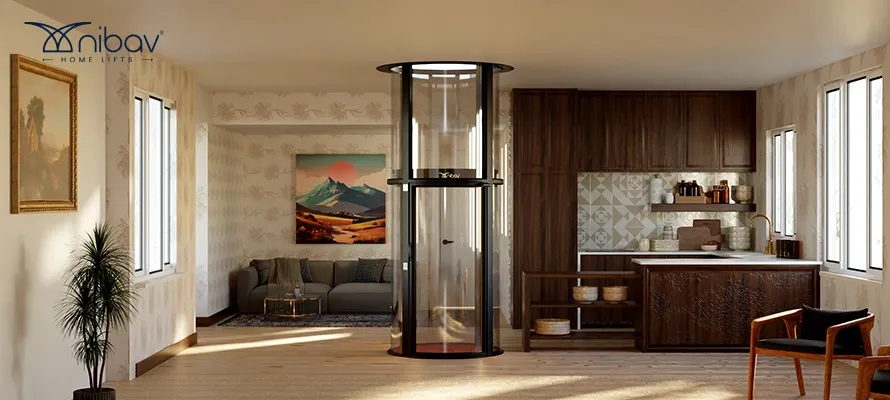
As Malaysia continues to see rapid growth in both residential and commercial construction, elevators have become a necessity rather than a luxury. From multi-storey terrace houses and bungalows to shopping complexes and office towers, vertical mobility plays a crucial role in daily life. However, not all elevators are built the same. Residential elevators and commercial elevators are engineered for very different environments, usage patterns, and safety expectations.
Understanding the difference between residential and commercial elevators is essential when selecting the right system for a building. Choosing the wrong type can result in higher costs, inefficient performance, and unnecessary structural modifications. Nibav Home Lifts in Malaysia specialises exclusively in residential elevators, designing systems that are purpose-built for private homes rather than adapting heavy commercial technology for domestic use.
Table of Contents
- What Is the Difference Between Residential and Commercial Elevators?
- Why Are Residential Elevators Engineered Differently from Commercial Elevators?
- Who Uses Residential Elevators and Who Uses Commercial Elevators?
- Where Are Residential and Commercial Elevators Installed?
- When Should You Choose a Residential Elevator Instead of a Commercial One?
- How Do Safety Standards Differ Between Residential and Commercial Elevators?
- How Do Design and Comfort Differ Between Residential and Commercial Elevators?
- How Do Energy Use and Maintenance Compare?
- Conclusion
What Is the Difference Between Residential and Commercial Elevators?
The fundamental difference between residential and commercial elevators lies in their intended application. Residential elevators are designed for private homes and low-frequency daily use, while commercial elevators are built for public buildings with constant traffic and higher passenger volumes.
Nibav residential elevators are engineered to support load capacities between 210 kg and 240 kg and vertical travel heights of up to 13,500 mm, typically serving up to G+3 floors. These specifications match the structural and mobility needs of Malaysian homes such as terrace houses, duplex residences, and bungalows. They operate using air-driven pneumatic technology, which moves the cabin through controlled air pressure and gravity-assisted descent.
Commercial elevators, by contrast, are built to carry significantly heavier loads, often starting at 630 kg and increasing to several tonnes. They rely on traction motors, counterweights, or hydraulic pistons and require reinforced shafts, deep pits, and machine rooms. Their engineering is focused on transporting large groups of people continuously rather than supporting domestic convenience.
Why Are Residential Elevators Engineered Differently from Commercial Elevators?
Residential elevators are designed around comfort, space efficiency, and safety for family use, while commercial elevators prioritise durability and passenger throughput. In a home environment, an elevator operates intermittently and must integrate smoothly into living spaces without disturbing daily activities.
Nibav residential elevators are self-supporting and do not require pits, machine rooms, or reinforced concrete shafts. Technically, the cabin moves inside a sealed cylindrical structure using pneumatic pressure instead of mechanical lifting systems. This eliminates many components found in commercial elevators, such as cables, pulleys, and hydraulic seals, reducing long-term mechanical stress.
Commercial elevators must withstand continuous operation throughout the day, particularly in high-traffic buildings. Their systems require heavy-duty motors and rigid guide rails capable of supporting repeated high-load cycles. These structural demands make them unsuitable for most residential properties where space and noise levels are important considerations.
Who Uses Residential Elevators and Who Uses Commercial Elevators?
Residential elevators are intended for private users within a household, including seniors, children, and individuals with mobility challenges. Their purpose is to support aging in place, improve accessibility, and enhance daily convenience. Nibav residential elevators are equipped with smart overload sensors calibrated at 210 kg or 240 kg, allowing wheelchair users and caregivers to travel together safely.
Commercial elevators are designed for public use in environments such as offices, hotels, hospitals, and shopping centres. They must accommodate large groups of people, equipment, and emergency services. Because of this, commercial elevators are built with higher load capacities and stronger mechanical systems but also require more extensive safety infrastructure.
This distinction in user type directly influences how each elevator system is engineered, from speed control to door mechanisms and braking systems.
Where Are Residential and Commercial Elevators Installed?
Residential elevators are installed within private properties, including terrace houses, townhouses, duplex homes, and bungalows. Nibav residential elevators can be placed in stair voids, living rooms, central hallways, or near entrances because they do not require pits or machine rooms. Their transparent polycarbonate cabins allow light to pass through, which helps maintain an open feeling in compact spaces.
Commercial elevators must be installed inside dedicated shafts that form part of the building’s structural framework. These shafts require reinforced walls, deep pits, and overhead machine rooms. As a result, commercial elevators must be incorporated into architectural designs from the planning stage and are difficult to retrofit later without major structural changes.
This difference in installation requirements highlights why residential elevators must be purpose-built rather than adapted from commercial designs.
When Should You Choose a Residential Elevator Instead of a Commercial One?
A residential elevator should always be chosen when the building is a private home and the goal is to improve mobility, comfort, and long-term accessibility. Installing a commercial elevator in a home usually leads to unnecessary civil work, higher installation costs, and increased power consumption.
Nibav residential elevators can typically be installed within 3 to 5 working days once the site is prepared. Because they do not require excavation or machine rooms, installation causes minimal disruption and can even be completed while homeowners remain on-site.
Commercial elevators, on the other hand, often require weeks or months to install due to the need for pits, shafts, and mechanical rooms. This timeline is suitable for large construction projects but impractical for residential retrofits.
How Do Safety Standards Differ Between Residential and Commercial Elevators?
Commercial elevators must comply with public safety codes designed for mass transport. These standards focus on evacuation capacity, fire-rated shafts, and emergency operation for large numbers of users.
Residential elevators follow safety standards tailored for private environments. Nibav residential elevators incorporate dual braking systems, automatic emergency descent during power failure, door interlocks that prevent opening unless the cabin is level with the floor, and smart overload sensors that stop operation when capacity is exceeded.
Technically, Nibav elevators use precision landing technology that aligns the cabin within 1 to 2 mm of floor level, reducing the risk of trips and falls for seniors and wheelchair users. They also operate on low-draw single-phase residential power, reducing heat generation and electrical stress.
Nibav Home Lifts manufactures its residential elevators under ISO 9001:2015 quality management systems and integrates TÜV NORD–certified safety components. This ensures that braking systems, door locks, and pressure regulation mechanisms meet internationally recognised safety benchmarks.
How Do Design and Comfort Differ Between Residential and Commercial Elevators?
Residential elevators are designed to blend into home interiors rather than resemble industrial machinery. Nibav elevators feature panoramic cabins made from high-strength polycarbonate panels that are lightweight, impact-resistant, and transparent. This creates a sense of openness and enhances interior aesthetics.
Commercial elevators focus on durability and wear resistance rather than visual appeal. Their interiors are built to withstand heavy traffic and frequent use, making them visually and structurally less suitable for private living spaces.
How Do Energy Use and Maintenance Compare?
Residential pneumatic elevators consume electricity mainly during ascent and rely on gravity for descent, which significantly reduces overall energy usage. Commercial elevators consume power in both directions and generate more heat due to continuous motor operation.
From a maintenance perspective, Nibav residential elevators are oil-free and greaseless. Routine servicing involves inspection of turbine motors, rubber seals, braking systems, and control boards rather than oil replacement or hydraulic servicing. Commercial elevators require more frequent and complex maintenance of motors, cables, and hydraulic systems.
Conclusion
Residential and commercial elevators differ fundamentally in purpose and engineering. Commercial elevators are designed for public buildings where heavy loads and continuous operation dominate design priorities. Residential elevators are built for private homes where space efficiency, comfort, and family safety are essential.
Nibav Home Lifts in Malaysia focuses exclusively on residential elevator engineering, offering air-driven pneumatic systems that eliminate the need for pits, machine rooms, and heavy mechanical components. With TÜV-certified safety systems, ISO-controlled manufacturing, and compact installation design, Nibav residential elevators are created specifically for Malaysian homes rather than adapted from commercial technology.
Choosing the right type of elevator ensures better safety, lower maintenance, and long-term reliability. For private residences, a purpose-built residential elevator provides a more practical, efficient, and family-friendly solution than a commercial lift system.