 By
Nadia Khalis on
February 10, 2026 at 9:45 am | Updated on March 5, 2026 at 6:44 am
By
Nadia Khalis on
February 10, 2026 at 9:45 am | Updated on March 5, 2026 at 6:44 am 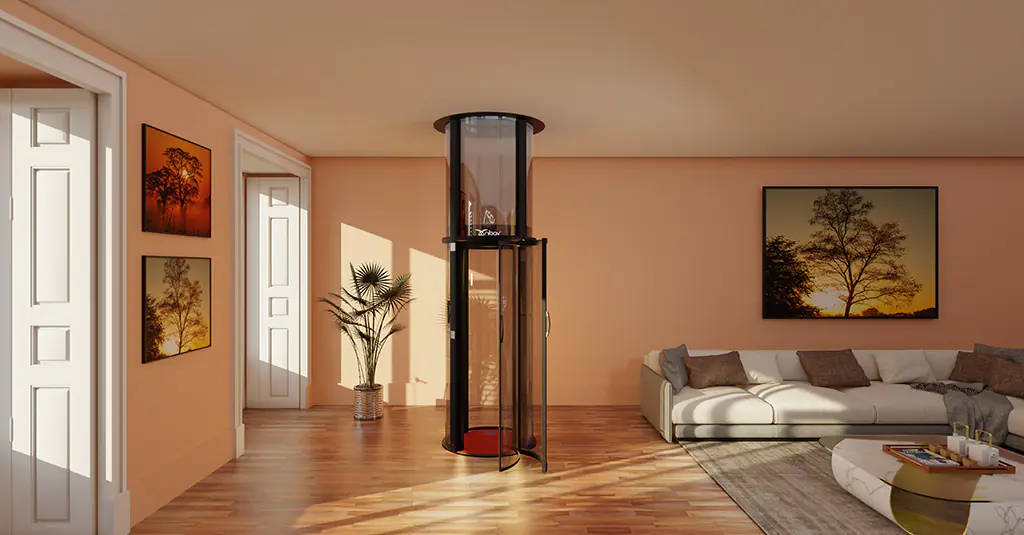
Modern Malaysian homes are becoming smarter, more vertical, and more space-conscious. Terrace houses, townhouses, duplexes, and compact bungalows often have limited floor area, yet homeowners increasingly want the comfort and accessibility of a residential elevator. The challenge is finding a solution that delivers smooth vertical mobility without occupying large portions of living space.
This is where small home elevators for compact spaces become essential. Instead of relying on bulky shafts, deep pits, and machine rooms, today’s compact residential elevators are engineered to fit into tight layouts while maintaining safety, performance, and visual appeal.
Nibav Home Lifts uses air-driven pneumatic technology to create compact home elevators that can be installed in stair voids, corners, living rooms, and narrow interior zones without heavy structural modification. These systems are designed specifically for homes where space efficiency matters as much as functionality, making them ideal for modern Malaysian living.
Table of Contents
- Why Compact Home Elevators Are Ideal for Small Homes
- Where Compact Home Elevators Can Be Installed
- Which Nibav Product Suits Which Compact Space
- How Compact Elevators Improve Daily Living
- Why Compact Elevators Are Better Than Stairlifts
- How Installation Works in Compact Homes
- Certified Quality and Safety Standards
- Conclusion
Why Compact Home Elevators Are Ideal for Small Homes
Compact home elevators are built to minimize space usage while maximizing usability. Unlike traditional hydraulic or traction elevators, pneumatic elevators do not require a pit, machine room, or counterweight system. This allows installation directly on finished flooring with only vertical clearance needed for travel.
Most compact Nibav models require between 1010 mm and 1430 mm of clear floor space and support vertical travel heights of up to 13,500 mm, allowing them to serve up to G+3 levels. Load capacities range from 210 kg to 240 kg, making them suitable for daily residential use, including wheelchair access in selected models.
Because they use air pressure for movement, they consume approximately 3.7 kVA during ascent and no electricity during descent, which is especially beneficial in smaller homes with limited electrical capacity. This makes them one of the most energy-efficient home elevators for compact houses.
Where Compact Home Elevators Can Be Installed
One of the key advantages of compact pneumatic elevators is placement flexibility. Since they are self-supporting structures, they can be installed in locations that were previously unsuitable for elevators.
Common installation areas in compact Malaysian homes include:
- Stair voids
• Living rooms
• Near entrance foyers
• Between bedroom floors
• Central hallways
• Corner spaces beside staircases
Their cylindrical structure and transparent polycarbonate cabin design allow natural light to pass through, preventing enclosed spaces from feeling smaller. This is particularly valuable in narrow terrace homes and townhouses where light flow is important.
Because no excavation or heavy civil work is required, compact elevators can be added to both new homes and existing residences without major architectural disruption.
Which Nibav Product Suits Which Compact Space
Different compact homes have different spatial and mobility requirements. Choosing the correct model depends on available floor area and whether wheelchair accessibility is needed.
Series III Standard
For very compact homes, narrow stair voids, and tight interior corners, the Series III Standard is the most suitable option. It requires approximately 1010 mm of clear space and features an internal cabin diameter of 749 mm with a 210 kg load capacity, making it ideal for terrace houses and duplex homes where preserving floor space is critical.
Series III Max
For compact homes that require wheelchair accessibility, the Series III Max is the best fit. It requires about 1430 mm of clear space and provides an internal cabin diameter of 1160 mm with a 240 kg load capacity, allowing wheelchair users and caregivers to travel together safely while still fitting within limited layouts.
Series IV Standard
For modern compact homes focused on design and openness, the Series IV Standard works well. With a clear space requirement of around 1000 mm and an internal cabin diameter of 830 mm, this model integrates smoothly into stair voids or living areas while maintaining panoramic visibility.
Series IV Max
For compact luxury homes and small villas that need more cabin space without consuming excessive floor area, the Series IV Max is the ideal solution. It requires approximately 1430 mm of clear space and offers an internal cabin diameter of 1240 mm with a 240 kg load capacity, providing superior comfort while remaining space efficient.
Compact Space Suitability by Nibav Product
| Compact Space Type | Suitable Model | Technical Reason |
| Very small homes and stair voids | Series III Standard | 1010 mm clear space, 749 mm cabin |
| Small homes with wheelchair users | Series III Max | 1160 mm cabin, 240 kg capacity |
| Modern compact interiors | Series IV Standard | Slim footprint, panoramic cabin |
| Compact villas and premium homes | Series IV Max | 1240 mm cabin with limited floor usage |
What Makes These Elevators Technically Compact
Compactness is achieved through engineering rather than downsizing performance. These elevators operate using controlled air pressure within a vertical cylinder, eliminating the need for cables, oil, or counterweights.
They use precision landing technology that aligns the cabin with the floor within millimeter accuracy, ensuring safe entry and exit even in narrow installation zones. The cabins are constructed from high-strength polycarbonate panels designed to be transparent, impact-resistant, and lightweight.
Because they are self-supporting, they rest directly on finished flooring without requiring load-bearing shafts, reducing space consumption and simplifying retrofits in compact homes.
How Compact Elevators Improve Daily Living
Compact home elevators improve usability without changing how a home functions. Residents can move between floors without using stairs, making daily routines easier for elderly family members, children, and people with limited mobility.
The soft start and soft stop ride algorithms ensure smooth acceleration and deceleration, reducing motion discomfort. Silent mainboard control keeps noise levels low, which is important in small homes where sound travels easily between rooms.
By allowing movement between levels without occupying stair width or corridor space, compact elevators preserve interior flow and usability.
Why Compact Elevators Are Better Than Stairlifts
Stairlifts require users to transfer from a wheelchair to a seat and travel along an inclined rail. This process can be physically demanding and limits who can use the system.
Compact home elevators allow users to remain standing or seated in their wheelchair inside an enclosed cabin. They provide full vertical travel, step-free entry, and stable ride quality. With load capacities up to 240 kg, they support users along with caregivers or mobility devices.
In compact homes, this means better accessibility without sacrificing architectural flexibility.
How Installation Works in Compact Homes
Compact elevators are delivered in modular components and assembled on site. Because no pit or machine room is required, installation can typically be completed within three to five working days once the site is prepared.
This reduces disruption for homeowners and allows installation even in occupied residences. Since no heavy construction is involved, dust, noise, and material waste are minimized, making it suitable for urban and high-density Malaysian housing.
Certified Quality and Safety Standards
Nibav Home Lifts are manufactured using ISO 9001:2015 certified quality management systems and incorporate TÜV NORD–certified safety components, ensuring every compact home elevator meets strict international benchmarks for reliability, performance, and user protection.
These globally recognized certifications confirm that each lift is engineered, tested, and assembled under controlled standards designed specifically for long-term residential use, giving homeowners confidence in daily operation, structural integrity, and consistent safety performance.
Conclusion
Small home elevators are no longer limited to large houses or luxury mansions. With modern air-driven technology, compact elevators can be installed in tight spaces while delivering full residential performance.
By choosing the correct series based on available space and mobility needs, homeowners can enjoy vertical mobility without sacrificing layout or aesthetics. The Series III Standard, Series III Max, Series IV Standard, and Series IV Max each provide targeted solutions for compact homes of different sizes and lifestyles.
Compact design, efficient engineering, and thoughtful placement allow modern Malaysian homes to remain accessible, stylish, and future-ready.
FAQ
How much space does a compact home elevator require?
Compact models typically require between 1000 mm and 1430 mm of clear floor space depending on the series.
Do compact elevators need a pit or machine room?
No. All compact pneumatic models are designed without pits or machine rooms.
Which model is best for wheelchair users in small homes?
Series III Max and Series IV Max are designed for wheelchair access with 240 kg load capacity and wide internal cabins.
Can compact elevators be installed in existing homes?
Yes. Their self-supporting structure allows retrofit installation with minimal civil work.
How many floors can compact elevators serve?
They support up to G+3 levels with a maximum travel height of 13,500 mm.