 By
Nadia Khalis on
March 23, 2026 at 4:58 am | Updated on March 23, 2026 at 4:58 am
By
Nadia Khalis on
March 23, 2026 at 4:58 am | Updated on March 23, 2026 at 4:58 am 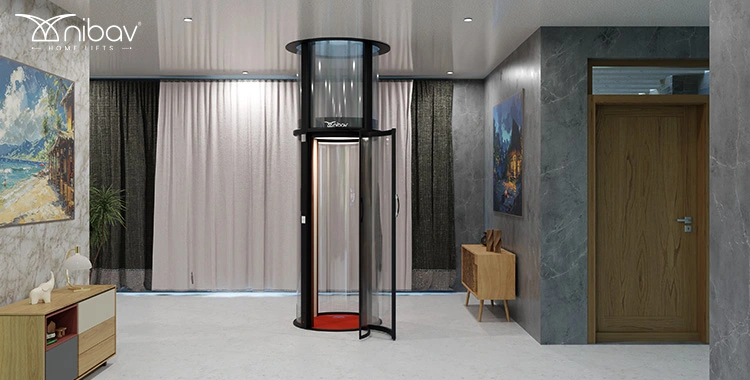
Table of Contents
- Vacuum Home Lifts: Myths You Should Stop Believing
- Myth 1: Vacuum Lifts Are Unsafe
- Myth 2: Vacuum Lifts Are Power Hogs
- Myth 3: Vacuum elevators will require significant modifications to your home.
- Myth 4: Vacuum elevators are noisy.
- Myth 5: Vacuum Home Lifts are for Small Houses Only.
- Myth 6: Vacuum Lifts are Less Durable than Conventional Elevators.
- Myth 7 – Vacuum Lifts Are Just an Aesthetic Type of Lift
- Understanding the Way a Vacuum Lift Works
- Conclusion
- Frequently Asked Questions (FAQs)
Vacuum Home Lifts: Myths You Should Stop Believing
Due to the emergence of small and efficient vertical mobility options, Malaysian homeowners have become very interested in vacuum lifts. Even though they are gaining popularity, a number of misbeliefs about vacuum lifts still pervade the public mindset—most of which have to do with safety, energy consumption, structural support needed to install one, and long-lasting craftsmanship of the lift itself.
The purpose of this blog is to outline the most common myths associated with vacuum lifts, state how pneumatic systems function, and show how vacuum lifts are becoming one of the preferred choices for homeowners in Malaysia.
Myth 1: Vacuum Lifts Are Unsafe
Many myths about vacuum lifts are based on the perception that they are not as safe as conventional elevators. However, most vacuum home lifts have been engineered with multiple safety features and operate on a pneumatic system using controlled air pressure (as opposed to gravity acceleration, also referred to as ‘free fall’) to control cabin descent.
Some examples of safety features:
– Automatically engaging mechanical brake systems (descent)
– Mechanically interlocking door systems
– Emergency stop buttons (located both within the cabin and outside at each door)
– Pressure-regulating mechanisms to control cabin descent
– Battery backup (allows controlled descent in case of a power outage)
Compared to hydraulic and traction systems that operate using oil pressure and rely on cables and counterweights, vacuum lifts have far fewer moving parts; therefore, they have a much lower risk of experiencing mechanical failure.
The basis of safety in pneumatic systems is on the principles of pressure balance engineering and not cable and/or heavy motor systems.
Myth 2: Vacuum Lifts Are Power Hogs
Another common misunderstanding about vacuum lifts is that they consume so much electricity that they would be considered a huge energy drain, primarily due to the operation of the turbine.
In reality, pneumatic systems are considered one of the most energy-efficient residential lift technologies available today. Power consumption in vacuum elevators:
- During upward travel, vacuum elevators consume electrical energy.
- On the other hand, when travelling down, only gravity needs to act, and no energy is consumed.
- Electricity consumption in the standby mode of vacuum elevator systems is minimal.
As compared to other devices in the home, vacuum home elevators have low energy consumption because they do not require hydraulic pumps or large traction motors for operation. As a result, these systems require minimal overall electricity consumption.
Vacuum elevators can help homeowners who are concerned about high electricity bills.
Myth 3: Vacuum elevators will require significant modifications to your home.
Many homeowners believe that to install a vacuum elevator, you must excavate deep pits, install stiffened concrete shafts or build a separate machine room, like conventional elevators. These assumptions are based on experiences as a result of conventional elevator systems.
Modern vacuum elevator systems from Nibav for example are self-supporting structures and do not require:
- Deep pits
- Separate machine rooms
- Stiffened shafts
- Three-phase electrical upgrades
Most vacuum elevators in Malaysia operate on regular 240V single-phase domestic service and are suited for existing landed properties, duplexes and villas. Their cylindrical design evenly distributes the load horizontally and reduces or eliminates the need for structural reinforcement. When the installation is completed, they require significantly less time to install as opposed to traditional elevator technologies.
Myth 4: Vacuum elevators are noisy.
People believe vacuum elevators are noisy because they have a pneumatic operating system that has an air turbine. The truth is that today’s turbine motors incorporate noise-reducing technologies, and they operate at noise levels similar to most household appliances, like a clothes washer and vacuum cleaner, but only while moving upward.
- There are no hydraulic pumps producing noise.
- There is no cable-to-cable friction noise.
- There is no counterweight vibration noise.
If you are not in the elevator while it is moving down, once it has reached the next stop, it will be silent.
Gravity-based movement reduces operational noise during descent. Acceptable residential home lift noise is well within the sound level of proper installation.
Myth 5: Vacuum Home Lifts are for Small Houses Only.
Some homeowners think that vacuum lifts are not for larger homes, but in fact vacuum lifts are designed to support multi-level (up to 3-4 floors) house structures, e.g.:
- Multi-level villas
- Duplexes
- Townhouses
- Renovation projects
- New residential building
Typical load caps for Nibav vacuum lifts are 210kg to 240kg and support between 2 and 4 passengers depending on lift configuration.
Increased footprint reduces overall bulk and allows tight installs without compromising on performance.
Myth 6: Vacuum Lifts are Less Durable than Conventional Elevators.
Most people think because vacuum lifts have a lightweight & transparent design that the durability of a vacuum home lift will be a concern; however, vacuum lifts’ modern-day design consists of:
- Heavy-duty aluminium frame
- Polycarbonate cylinder dome
- Commercial-use class motor/turbine system
- Precision sealed air system
Fewer mechanics will reduce wear & tear on components over time, including:
- No hydraulic leaks
- No steel cables
- No counterbalance
Vacuum home lift preventative maintenance will mainly be turbine & air seals. If properly maintained, vacuum home lifts will operate for many years to come in Malaysia and abroad.
Myth 7 – Vacuum Lifts Are Just an Aesthetic Type of Lift
Nibav Vacuum lifts are functional accessibility, not just an aesthetic. They provide:
– Safer independence for elderly
– Support for wheelchair users, i.e. Cabin size/dimensions
– Increase property value for the long term
– Less dependence on stairs
Vacuum home lifts in Malaysia’s growing number of multi-storey homes are now both, as previously, they were solely aesthetic; they are now recognised as practical accessibility solutions and smart home mobility solutions.
Understanding the Way a Vacuum Lift Works
Understanding how Vacuum lifts work will also help to eliminate myths. The operations of the Vacuum Lift are very simple. A vacuum lift works on a very basic principle:
– Air is evacuated from the cylinder above the cabin by a turbo motor.
– A pressure difference between the high- and low-pressure areas will cause it to rise.
When the vacuum lift goes down:
– Air is permitted back into the upper cylinder.
– Gravity pulls it down.
– The speed/stability of the lift is controlled by pressure control valves.
Because of the simplicity of pneumatic engineering, there is less need for complicated mechanical systems; therefore, there are fewer chances for multiple failures.
Conclusion
The common misperception about vacuum lifts in Malaysia is due to the fact that most people have only outdated comparisons to hydraulic and traction lifts. Modern vacuum home lifts from Nibav are all of the following:
– Energy-efficient
– Structurally adaptable
– Quiet in operation
– Simple mechanically
– Safe and meets current regulations
Therefore, if you are a homeowner wanting to provide vertical mobility means in your home, having knowledge of the technical facts surrounding these myths will help you make an informed decision.
As building continues to go up, vacuum lifts will become, and do provide, practical, space-saving, and future-ready solutions in housing applications.
Frequently Asked Questions (FAQs)
- Are vacuum lifts safe to use in residential buildings in Malaysia?
Yes, Vacuum lifts in Malaysia have automatic braking systems, gravity-controlled descent, interlock doors and are connected to battery backup.
- Do vacuum home lifts require a lot of energy to run?
No, Vacuum home lifts only use energy to go up. Going down they use gravity; thus, they use less energy than most traditional systems.
- Do vacuum lifts require deep pits/machine rooms?
No, (most) vacuum lifts are self-supporting and do not need deep pits/reinforced shafts/machine rooms.
- Are vacuum lifts noisy?
The noise from vacuum lifts when moving up is comparable to a typical appliance; the noise associated with going down is negligible (because they go down by gravity).
- What is the life expectancy of a vacuum lift?
Vacuum lifts in Malaysia have a long life expectancy (with normal maintenance) because they have fewer mechanical components and simpler pneumatic systems.