 By Nadia Khalis on May 27, 2026 at 5:18 am |



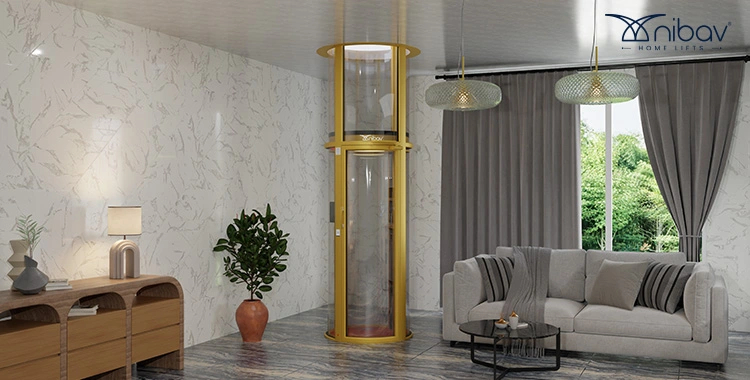
Residential Elevators with AI & IoT: The Future of Smart Homes You Can’t Afford to Ignore
Picture this: you are cooking dinner on the ground floor, your elderly mother is upstairs, and the lift summons itself to her floor the moment it detects her routine movement pattern approaching the landing. The doors open automatically. The display is already set to her preferred brightness. The system has already notified your phone that she is using the lift — and will send another notification when she arrives safely. No buttons pressed. No calls made. Just quiet, intelligent technology doing exactly what it should.
This is not a concept for 2035. This is what AI-powered home elevators are already beginning to deliver — and in Malaysia’s rapidly evolving smart home market, the gap between homes that have this technology and homes that do not is growing wider every year. This article explains what AI and IoT residential elevators actually do, why they matter, and how Nibav Malaysia is already building the future into every model in its range.
Table of Contents
What Does Smart Actually Mean in a Residential Elevator?
The term smart home elevator gets used loosely. Before it can mean anything useful, it needs to be defined clearly. In the context of modern residential elevators, smart capabilities fall into four categories: intelligent control, predictive safety, remote monitoring, and personalised experience.
Intelligent control means the elevator can be operated by multiple input methods — voice command, app gesture, touchscreen — and can be integrated with existing smart home ecosystems like Amazon Alexa, Google Home, or proprietary home automation platforms. Rather than pressing a physical button, a family member says lift, third floor and the elevator responds. For elderly users with limited dexterity, this is not a gimmick — it is a genuine accessibility breakthrough.
Predictive safety means the elevator’s onboard systems continuously monitor operating parameters — air pressure, door sensor status, cabin weight, descent speed — and can flag anomalies before they become failures. IoT connectivity allows this data to be transmitted to a service centre in real time, enabling proactive maintenance rather than reactive repair. The elevator essentially tells your technician it needs attention before it ever affects your daily routine.
Remote monitoring means that family members — whether at work, travelling, or in another part of the house — can check elevator status, usage logs, and safety alerts from their smartphone. For families with elderly members using the elevator independently, this delivers genuine peace of mind: not just hope that everything is fine, but real-time confirmation.
Personalised experience is the dimension that most traditional elevator companies have not yet thought about seriously. Nibav’s Series V range addresses this directly with the VividTouch display system — a smart interface that allows users to choose display themes, brightness settings, and control layouts that suit their preferences. The HeartLine feature takes personalisation a step further, laser-engraving a family name or personal message inside the cabin wall, transforming a piece of technology into something that genuinely belongs to your home.
Why Traditional Elevators Cannot Keep Up
Conventional residential elevators — hydraulic and traction systems installed in permanent concrete shafts — were not designed for the smart home era. Their control systems are typically mechanical or basic electronic, offering no connectivity, no remote monitoring, and no integration with smart home platforms. Adding IoT capabilities to these systems requires costly retrofitting, if it is even possible at all.
More fundamentally, traditional elevators are static infrastructure. They cannot be updated with new features, they cannot communicate with other home systems, and they cannot be relocated if you move. In a rapidly evolving technology landscape, installing a traditional elevator in a new home today is like buying a premium sound system with no Bluetooth capability — functional, but already behind the times.
How Nibav Integrates AI and Smart Technology Across Its Full Range
Nibav Malaysia’s approach to smart home elevator technology is distinctive: rather than making connectivity an optional add-on, it is built into the architecture of the product range. Every model benefits from this philosophy, from the entry-level Series III to the flagship Series V Max.
The Series III Standard (from MYR 89,900*) and Series III Max (from MYR 119,900*) establish the foundation: a transparent, air-driven elevator with a touchscreen interface, comprehensive automated safety systems, and Alexa voice integration. These are not premium extras — they are standard. For homeowners entering the smart home elevator category for the first time, the Series III range offers a genuine technology platform at an accessible price.
The Series IV Standard (from MYR 119,900*) advances this significantly with full AI and voice readiness, app-based gesture control, and smart home ecosystem integration. The VividTouch display debuts in this tier, offering customisable interface themes and an intuitive user experience that adapts to different family members. The Series IV Max (from MYR 146,900*) adds the same intelligence to a larger, more luxurious cabin — bringing smart mobility solutions for homes to families that need both technology and space.
The Series V Standard and Series V Max represent Nibav’s most complete statement on what an AI-powered home elevator should be. SmartConnect integrates emergency communication directly into the touchscreen — no separate device, no handset to locate in an emergency — and remains operational even during power failures. AutoGlide uses sensor technology to detect user approach and open doors automatically, removing friction from the most fundamental interaction with the elevator. The SkyMark illuminated ceiling signature and HeartLine personalisation feature complete a user experience that is as emotionally resonant as it is technologically sophisticated. The CoreShield 25-year warranty on motor and vacuum seal on Series V models ensures this investment performs at the same level a decade from now as it does on day one.
IoT and the Broader Smart Home Ecosystem
The most valuable smart home elevators are not those with the most features in isolation — they are those that integrate most effectively with the broader systems in a home. Nibav’s AI-ready models are designed with this in mind, compatible with Malaysia’s most widely adopted smart home platforms.
Consider what this enables in practice. Your home automation system knows that your family’s morning routine begins at 7am. It can pre-position the elevator on the ground floor before the first family member reaches it. It can log usage patterns and alert you if an elderly parent’s routine deviates — a potential early indicator that something requires attention. It can integrate with security systems, lighting, and door locks to create a seamlessly connected living environment where the elevator is one intelligent node in a wider network.
This is the direction all premium residential homes in Malaysia are moving. The question is not whether your home will eventually need this kind of intelligent vertical mobility — it is whether you will install it proactively, or scramble to catch up later.
Bring your home into the smart living era. Book a free Nibav smart elevator demonstration today at nibavlifts.my
Frequently Asked Questions
Q1. What smart features do Nibav AI-powered home elevators include?
Nibav’s smart home elevators include voice command operation (Alexa integration), app-based gesture control, VividTouch customisable display interface, SmartConnect touchscreen emergency communication, AutoGlide sensor-activated doors, and IoT-ready connectivity for integration with home automation platforms. These features are available across the Series IV and V range.
Q2. Can a smart home elevator integrate with my existing home automation system?
Yes. Nibav’s Series IV and V models are designed to integrate with popular smart home platforms including Amazon Alexa. AI and voice readiness is built into the product architecture, allowing the elevator to become one connected node in your broader home automation system.
Q3. Are smart home elevators significantly more expensive than standard models?
Not with Nibav. The Series III Standard begins at MYR 89,900* with basic smart features including Alexa integration as standard. More advanced AI capabilities are available from MYR 119,900* (Series IV Standard). The incremental cost of smart technology in the Nibav range is significantly lower than adding similar capabilities to traditional elevator systems.
Q4. How does IoT connectivity improve elevator safety?
IoT-connected elevators like Nibav’s Series V models can transmit real-time operational data to service centres, enabling predictive maintenance before issues affect performance. Remote monitoring via smartphone allows family members to track elevator usage and receive safety alerts, providing genuine real-time peace of mind rather than hope.
Q5. Can an AI-powered home elevator be updated with new features over time?
Nibav’s smart elevator platforms are designed for software updateability, meaning new features can be introduced through system updates rather than hardware replacement. This future-proofs your investment and ensures your elevator stays current with evolving smart home standards.
Q6. Is a smart home elevator suitable for elderly family members who are not tech-savvy?
Yes. The AutoGlide door system on Series V models operates entirely automatically — the doors open when the user approaches, requiring no buttons or touchscreen interaction at all. Voice command operation via Alexa also provides a natural, conversational interface that most users find immediately intuitive regardless of technical background.