
 By Nadia Khalis on July 28, 2026 at 10:26 am |



How to Choose the Right Residential Elevator for Home in Malaysia
Climbing the stairs used to be nothing. Now your mother pauses on the landing to catch her breath. Your knees complain after a long day. And every time you carry groceries, a stroller, or moving boxes up three flights, you think the same thing: there has to be a better way to move around your own house.
That’s the moment most Malaysian homeowners start searching for a residential elevator for home use — and that’s also the moment things get confusing. Every brand claims to be the safest, the quietest, the most affordable. Some need a pit dug into your floor slab; others don’t. Prices range from around MYR 89,900 for a compact two-stop model to over MYR 189,900 for a larger, fully customised system, with no obvious explanation for the gap. If you’ve spent an evening scrolling through comparison sites feeling more lost than when you started, you’re not alone.
This guide cuts through the noise. Below, we walk through exactly what to look for, how residential elevator costs actually break down in Malaysia, and how to land on the best home elevator for your specific house — not just the one with the flashiest brochure.
Table of Contents
- What Is a Residential Elevator for Home, and Do You Actually Need One?
- Understanding Residential Elevator Cost in Malaysia
- Space, Structure, and Site: What to Check Before You Buy
- What Makes the Best Home Elevator for Your Household
- Choosing a Residential Elevator for Homes in Kuala Lumpur, Selangor, and Johor Bahru
- Hydraulic vs Pneumatic vs Traction: A Quick Comparison
- Why Nibav Malaysia Is a Trusted Name in Residential Elevators
- What Sets Nibav Apart When Choosing Your Home Elevator
- Making the Final Decision
- FAQs
What Is a Residential Elevator for Home, and Do You Actually Need One?
A residential elevator for home is a compact, low-speed lift designed specifically for private houses rather than commercial buildings. Unlike the elevators you’d find in a shopping mall or office tower, home elevators are built to be quiet, space-efficient, and simple enough for a child or an elderly grandparent to operate independently.
You don’t need to be planning a five-storey mansion to justify one. In Malaysia, the fastest-growing group of buyers isn’t ultra-luxury homeowners — it’s families with a duplex or triplex layout who have an ageing parent moving in, a family member recovering from surgery, or simply a household that’s tired of hauling laundry baskets up and down every day. If stairs have started to feel like an obstacle rather than a formality in your own home, that’s usually the first sign it’s worth exploring.
Understanding Residential Elevator Cost in Malaysia
This is where most homeowners get stuck. Residential elevator cost in Malaysia typically starts around MYR 89,900 for an entry-level, two-stop (G+1) model and rises with every additional floor served — a three-stop (G+3) configuration on the same entry-level model runs closer to MYR 119,900, while larger, higher-capacity models with premium finishes can reach MYR 189,900. That’s a wide range, and the reason comes down to a handful of factors:
Drive technology: Hydraulic lifts use pressurised fluid and are generally mid-priced; pneumatic (air-driven) lifts skip the pit and machine room entirely, which can lower installation costs even if the unit price is similar; gearless traction systems tend to sit at the premium end.
Number of stops: Every additional floor adds doors, wiring, and structural work, so a two-stop lift will always cost less than a four-stop one.
Cabin size and finishes: A glass panoramic cabin, custom RAL colours, or designer flooring can add a meaningful amount to the base price.
Site conditions: Retrofitting an existing home is usually more expensive than integrating a lift into new construction, where the shaft can be planned from day one.
A useful rule of thumb: ask every supplier for an itemised quote that separates the unit cost, installation, finishes, and any civil work. That way you’re comparing like for like, not just the number at the bottom of the page.
Space, Structure, and Site: What to Check Before You Buy
Before you fall in love with a particular model, walk through your home with a tape measure and answer three questions.
First, do you have room for a pit? Traditional hydraulic and traction elevators often require a recess in the floor slab, which can be difficult in an already-built home. Pitless, self-supporting designs solve this by sitting directly on a finished floor, which is why they’ve become popular for retrofits.
Second, how many floors does the lift need to serve, and what’s your daily usage pattern? A family using the lift several times a day has different needs than someone installing it mainly for occasional use or emergencies.
Third, check your strata or condo approval requirements if you live in a gated community — access windows for installation crews and structural sign-offs can affect your timeline more than the lift itself.
What Makes the Best Home Elevator for Your Household
There’s no single best home elevator — there’s only the best one for your house, your budget, and the people who’ll use it daily. That said, a few features are worth prioritising regardless of brand:
Automatic emergency descent so the cabin lowers safely to the nearest floor during a power cut, rather than leaving anyone stuck.
A no-pit, no-machine-room design if you’re retrofitting, since it minimises disruption to your finished home.
Materials and seals rated for tropical humidity — Malaysia’s climate is hard on lifts that weren’t engineered for it.
Local servicing and spare parts availability. A beautiful lift with a six-week wait for a technician is a poor long-term investment.
If your household includes elderly residents, look specifically for gentle, controlled starts and stops, non-slip flooring, and simple, tactile controls rather than complex touchscreens that can be confusing under stress.
Choosing a Residential Elevator for Homes in Kuala Lumpur, Selangor, and Johor Bahru
Local conditions matter more than most buyers expect. In dense urban pockets of Kuala Lumpur and Petaling Jaya, space efficiency and installation speed tend to matter most, since many homes are retrofits with limited room to manoeuvre. In Selangor’s newer landed developments, buyers more often have the luxury of planning the lift shaft into the architecture from the start, opening up more design and technology options. In Johor Bahru and Penang, where multi-generational villas and larger bungalows are common, homeowners tend to prioritise higher-capacity cabins that can comfortably serve larger families.
Wherever you’re based, ask any shortlisted supplier about their local service network before signing anything. A national or international brand name means little if the nearest technician is hours away.
Hydraulic vs Pneumatic vs Traction: A Quick Comparison
If you’re brand new to this, the technology names alone can be confusing. Hydraulic elevators use pressurised fluid and a piston to move the cabin, offering a smooth, well-proven ride, but they typically require a pit and sometimes a small machine room. Traction or gearless elevators use motorised cables and tend to be faster and very quiet, though they’re often positioned at a higher price point. Pneumatic, or air-driven, elevators use air pressure differentials rather than cables or hydraulic fluid, which is why many pneumatic models can be installed without a pit or machine room at all — a major advantage for retrofits into finished homes.
None of these is universally better. A hydraulic lift might be the right call for a new-build home where the shaft is planned from the start, while a pneumatic system might make far more sense for an existing terrace house where you can’t dig into the slab. The right technology depends entirely on your site, not on which one has the flashiest marketing.
Why Nibav Malaysia Is a Trusted Name in Residential Elevators
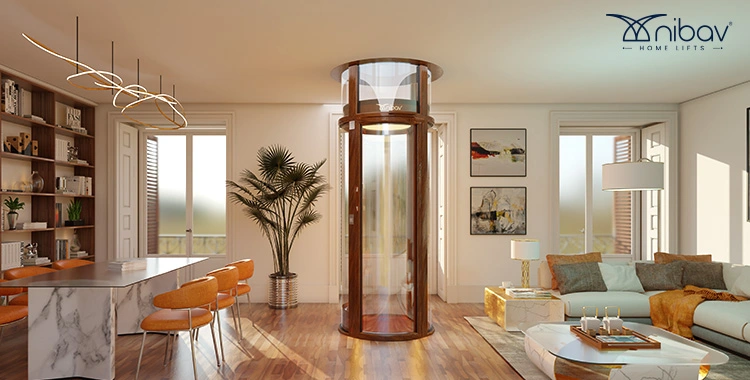
If you’re comparing suppliers as part of this process, Nibav Malaysia is worth including on your shortlist. Nibav is TÜV NORD certified, manufactured under ISO-certified quality standards, with the trust of 10,000+ homeowners worldwide. Its self-supporting, pitless design, requiring no pit or machine room, makes it an excellent choice for Malaysian homeowners looking to retrofit an existing home rather than build from scratch, which is the situation most first-time buyers in this guide are navigating.
What Sets Nibav Apart When Choosing Your Home Elevator
Beyond certifications, a few practical details matter when you’re actually living with the lift day to day. Nibav’s air-driven pneumatic technology draws power mainly while ascending and uses gravity and air pressure to descend, which keeps running costs lower than many traditional systems. Installation is typically completed in just 4 to 5 working days on a prepared site, and homeowners can choose from 20+ colour and finish combinations to match their interior. With 40+ experience centres and 500+ technicians worldwide, Nibav also backs its lifts with local consultation and service — the kind of on-the-ground support this guide recommends checking for before you sign with any company.
Making the Final Decision
Choosing a residential elevator for home use doesn’t have to be overwhelming once you break it into pieces: understand your space constraints, get transparent pricing broken down by component, prioritise safety features that matter for your household, and confirm local support before you commit. Most reputable suppliers, including Nibav Malaysia, offer a free home assessment and itemised quote — take advantage of that before making a final call, and don’t be afraid to request two or three comparisons side by side.
FAQs
How much does a residential elevator for home cost in Malaysia?
Most residential elevators in Malaysia range from around MYR 89,900 for a compact, entry-level two-stop model to over MYR 189,900 for larger, higher-capacity systems configured for three or more stops. The final residential elevator cost depends on drive technology, number of stops, cabin finishes, and site conditions.
Do home elevators require a pit or machine room?
It depends on the technology. Traditional hydraulic and traction systems often need a pit and sometimes a machine room, while pneumatic, self-supporting designs are built to sit directly on a finished floor without either — which is why they’re popular for retrofits.
Which is the best home elevator for a small terrace house?
Compact, self-supporting models with a small footprint work best in terrace homes with limited floor space, since they avoid major structural changes and fit into corners, stair voids, or lightwells.
How long does home elevator installation take in Malaysia?
Timelines vary by technology and site readiness, but many modern residential elevators — especially pitless, modular designs — can be installed in as little as 4 to 5 working days once the site is prepared.
Are home elevators safe during power outages?
Yes, provided you choose a model with automatic emergency descent and battery backup. These systems bring the cabin safely to the nearest floor and keep lighting and ventilation running during an outage, so no one is left stranded.

Mohd Irfan
Useful information for families looking to improve mobility between floors. The article explains the selection process in a straightforward way.
Lim Wei Jian
This is a great starting point for homeowners comparing different residential elevator options in Malaysia. Clear and practical information.
Farah Nabila
I appreciate how this article covers both convenience and safety. It gives homeowners a better idea of what to consider before making a decision.
Omar Hassan
Good overview of the key things to look for when selecting a residential elevator. The explanations are simple and easy to follow.
Zainab Ali
This article makes choosing a home elevator much easier to understand. The information about space, safety and installation is especially helpful.