
 By Nadia Khalis on September 11, 2026 at 4:48 am |



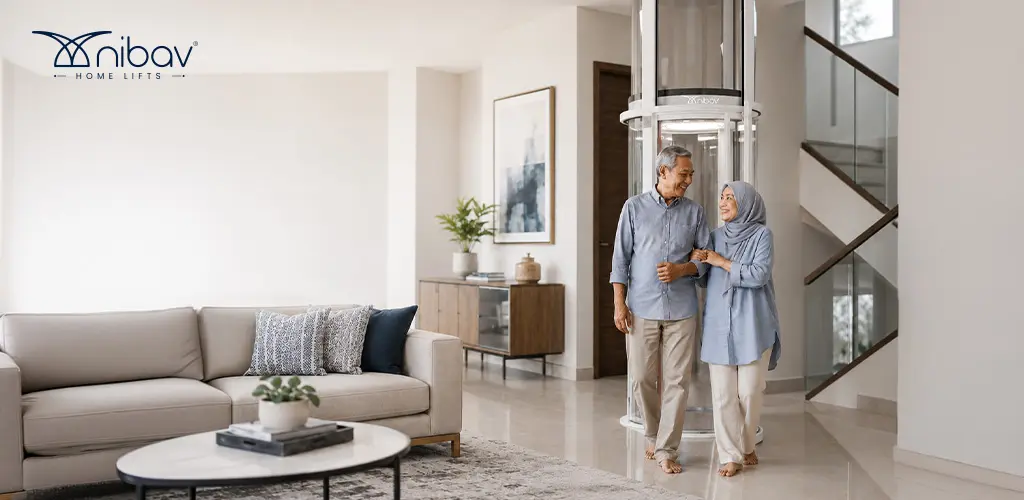
Best 2 Person Elevator for Compact Homes: Features, Benefits & Cost Guide
Your home doesn’t have room to spare, but the stairs are becoming a genuine problem, whether that’s a knee that’s started aching, a parent who’s moved in, or simply the daily hassle of carrying things between floors. Every home elevator you’ve looked at so far seems designed for a mansion, not the compact, efficiently laid-out house you actually live in.
That mismatch is frustrating, because most buying guides assume you’re choosing between luxury features rather than asking the more basic question: will this even fit, and is it actually worth the cost for a home this size? Without guidance specific to compact properties, it’s easy to either overspend on space and features you don’t need, or settle for something too small to be genuinely comfortable.
The good news is that a 2 person home elevator built specifically for compact homes solves this exact problem, offering genuine functionality without demanding a footprint your home simply doesn’t have. This guide covers what actually matters when choosing one.
Table of Contents
- What Makes the Best Home Elevator for a Compact Property
- 2 Person Home Elevator Sizing: What You Actually Need
- Compact Elevator for Home Retrofits: Installation Considerations
- Home Elevator Cost for Compact, 2 Person Models
- Choosing Between Compact Models: A Practical Checklist
- Why Nibav’s Compact Models Are Built for Homes Like Yours
- What Sets Nibav’s Compact Models Apart
- Frequently Asked Questions
What Makes the Best Home Elevator for a Compact Property
The best home elevator for a smaller property isn’t necessarily the one with the most features, it’s the one whose proportions genuinely match your available space. A compact elevator for home use should require a clear floor footprint of roughly one to 1.4 square metres, small enough to fit into a stair void, an unused corner, or a repurposed utility nook without demanding a full room’s worth of space.
Beyond footprint, look for a self-supporting design that doesn’t rely on a pit or machine room. This single factor determines whether installation is realistic in an existing compact home at all, since traditional elevator technology’s structural requirements simply don’t work in most smaller residential floor plans.
It’s also worth considering how the lift will feel to use daily, not just whether it technically fits. A cabin that’s merely adequate on paper can feel cramped in practice if the finish is dark or enclosed, whereas a well-designed compact model with a transparent, light-filled cabin can make even a small footprint feel genuinely comfortable rather than squeezed in as an afterthought.
2 Person Home Elevator Sizing: What You Actually Need
A genuine 2 person home elevator needs an internal cabin diameter that comfortably fits two adults standing together, generally in the range of 900mm to 1,000mm, without feeling cramped or requiring passengers to stand at awkward angles. It’s worth testing this in person if possible, since brochure dimensions don’t always translate to real comfort once you factor in typical daily use, carrying groceries, luggage, or simply moving with a bit more ease than a bare minimum spec allows.
Door width matters just as much as cabin size for a compact model. A narrow door on an otherwise adequately sized cabin creates an awkward entry experience that undermines the whole point of choosing a lift built for genuine daily convenience.
Compact Elevator for Home Retrofits: Installation Considerations
For most compact homes, retrofitting a lift into an existing floor plan is the more common scenario than building one into new construction. This is where self-supporting, air-driven technology genuinely shines, since it requires no pit, no machine room, and minimal structural alteration, fitting into the same limited space constraints that make compact homes efficient in the first place.
Installation timeline also matters more in a smaller, more heavily used home where extended construction disruption is harder to accommodate. Most self-supporting compact models can be installed within four to five working days, a dramatic improvement over the weeks or months a traditional elevator retrofit would require.
Home Elevator Cost for Compact, 2 Person Models
Home elevator cost for a compact, 2 person model is generally lower than larger, multi-passenger configurations, since smaller cabin dimensions and simpler installation both reduce the overall investment required. That said, cost still varies based on number of floors served, finish level, and whether the model includes additional features like app control or premium cabin materials.
When comparing quotes, make sure pricing reflects the same specification across suppliers, cabin size, travel height, and installation scope, rather than comparing a stripped-down base price against a fully featured one. A detailed, itemised quote protects you from an unwelcome surprise partway through the decision process.
Choosing Between Compact Models: A Practical Checklist
Before committing, confirm the exact clear floor space required against your home’s actual layout, ideally with a supplier conducting an in-person site visit rather than relying on a floor plan sketch alone. Ask about internal cabin dimensions specifically for two adults standing together, not just a generic passenger capacity figure, and request to test the door width and entry experience if a showroom visit is possible.
It’s also worth thinking ahead to how your needs might change. A compact 2 person elevator that comfortably serves a couple today should ideally still accommodate an occasional guest, a delivery, or a future mobility aid without needing to be replaced entirely down the line.
Finally, don’t overlook the supplier’s local track record specifically with compact installations. A company experienced in fitting lifts into smaller terrace and link houses will already have solved the specific space and access challenges your property is likely to present, rather than treating your compact floor plan as an unusual edge case.
Why Nibav’s Compact Models Are Built for Homes Like Yours
Nibav’s Series III range was engineered specifically for compact Malaysian homes, with a self-supporting cylinder requiring as little as 1010mm of clear floor space, small enough for a stair void or corner in most terrace and link houses. Every model is TÜV NORD certified, so choosing a compact size never means compromising on independently verified safety standards.
With installation typically completed within four to five working days and a physical experience centre in Kuala Lumpur, Nibav lets homeowners see and test the actual cabin proportions in person before committing to a decision this significant.
What Sets Nibav’s Compact Models Apart
Nibav’s Series III Standard offers a genuinely comfortable two-passenger cabin without an oversized footprint, paired with a screwless, panoramic polycarbonate shell that keeps even a compact space feeling open and light-filled. Combined with automatic emergency descent, precision floor levelling, and over 14 colour and finish options, Nibav proves a compact home elevator doesn’t need to feel like a compromise.
Frequently Asked Questions
What size cabin do I need for a 2 person home elevator?
Look for an internal cabin diameter of roughly 900mm to 1,010mm, which comfortably fits two adults standing together without feeling cramped during daily use.
How much floor space does a compact elevator for home use require?
Most compact, self-supporting models need roughly one to 1.4 square metres of clear floor space, small enough for a stair void, corner, or repurposed utility area.
Is a 2 person home elevator cheaper than a larger model?
Generally yes, since smaller cabin dimensions and simpler installation typically reduce overall home elevator cost compared to larger, multi-passenger configurations.
Can a compact home elevator be installed in an existing house without major renovation?
Yes, provided it’s a self-supporting, pitless design. Most compact models require only a flat floor and a power connection, avoiding the extensive structural work traditional systems demand.
How long does installation take for a compact home elevator?
Most self-supporting compact models are installed within four to five working days once the site is prepared, far faster than a traditional elevator retrofit.

Priya Nair
The article explains the benefits of a two-person home lift in a simple and easy-to-understand way. It is helpful for homeowners looking for a compact lift solution.
Nurul Syafiqah
This blog provides useful information about choosing a home elevator for compact spaces. The details about comfort, accessibility and installation considerations are especially helpful.
Rajesh Kumar
I found this article useful for understanding the main features of a two-person elevator. It gives a clear overview of what to consider before choosing a lift for a modern home.
Wong Jia Hao
A well-written guide for homeowners with limited space. The discussion about compact home lifts makes it easier to understand how a small elevator may fit into a residential setting.
Nadia Sofea
I enjoyed reading this guide because it explains two-person elevators without using too much technical language. The information is useful for anyone planning to improve accessibility at home.