 By Nadia Khalis on November 13, 2026 at 9:29 am |


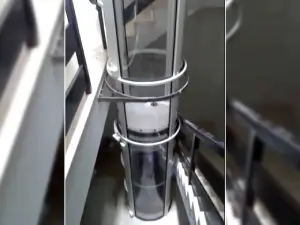
Luxury Home Lift Designs: Latest Aesthetic Options for 2026
Adding a luxury home lift should make a house easier to live in, yet many homeowners face the same challenges early on. A conventional home lift usually needs a pit, a machine room and structural changes the building was never planned for. The cabins tend to look industrial, and the finished unit rarely matches the interiors you have already invested in.
These problems grow once work begins. Civil construction stretches timelines and adds costs. A bulky shaft takes floor space you would rather keep. Noise, frequent servicing and confusing controls make daily use tiring, especially for older family members who need the lift most. Many buyers end up trading good design for practical access and are happy with neither.
This guide covers the aesthetic options leading the way this year, the home lift features that matter in everyday use, what influences home lift cost, and how Nibav Home Lifts models compare.
Table of Contents
- What Makes a Luxury Home Lift Different in 2026?
- What are the Latest Aesthetic Options from Nibav Home Lifts in 2026?
- Panoramic cabins that open up the room
- Screwless and seamless exteriors
- Finish palettes beyond basic white
- Personal touches inside the cabin
- Taller cabins and wider, hands-free doors
- What are the Home Lift Features That Turn Good Looks into Comfort?
- What Shapes the Home Lift Cost of a Luxury Model?
- Which Nibav Home Lifts Model Fits Your Floor Plan?
- Frequently Asked Questions
- 1. How much does a luxury home lift cost?
- 2. Does a home lift need a pit or a machine room?
- 3. How much space do I need to install a home lift?
- 4. Can a home lift be customised to match my interiors?
- 5. What happens to a home lift during a power cut?
What Makes a Luxury Home Lift Different in 2026?
Luxury used to mean more: more gold trim, more mirrors, and more gloss. In 2026 it means restraint. Homeowners and architects now judge a lift by how calmly it sits in a room and how little it asks of the building around it.
Three shifts define the category this year.
Nibav Home Lifts are freestanding units that need no supporting beam, column or wall. The external shaft is polycarbonate, rated 250 times stronger than ordinary glass, so the lift can sit in a stairwell void, a corner of the living room or a double-height foyer.
There is no pit, no machine room and no headroom excavation. Units run on single-phase power and arrive as a completely knocked down (CKD) kit, which keeps dust and disruption low. Because the kit is modular, the lift can be dismantled and moved if you relocate.
What are the Latest Aesthetic Options from Nibav Home Lifts in 2026?
The newest models give you real choices in how the lift looks and feels. Here are the options shaping premium homes this year.
Panoramic cabins that open up the room
A transparent shaft and curved cabin remove the boxed-in feeling of a traditional lift. Light passes through, sightlines stay intact, and riders who dislike closed spaces feel far more at ease. In a double-height hall, the lift reads more like a sculpture than a machine.
Screwless and seamless exteriors
Visible fasteners break the calm of a minimal interior. On Series V models, ZeroTrace™ hides every screw, rivet and bolt behind shaped panels. Earlier series also use flush joints with no visible welds or rivets, so the profile stays clean from every angle.
Finish palettes beyond basic white
Series V and V Max offer 20+ colour and finish combinations across five collections: Standard (4 options), Textured Edition (8), Metallic Edition (4), Hydro Edition Matt (4) and Hydro Edition Glossy (4). Textured and metallic surfaces come as standard on Series V. Series III offers 14 colour choices with matching carpet options, so even the entry model can be matched to your décor.
Personal touches inside the cabin
HeartLine™ laser-engraves a family name or dedication into the cabin wall. SkyMark™ turns the ceiling into an illuminated centrepiece. You can also choose from 8 leather-finish interiors, 4 carpet styles, ambient glow lighting, a foldable seat and handrails.
Taller cabins and wider, hands-free doors
Grande™ raises cabin height for a more open ride. GlideWide™ gives the widest cabin door in its class, which helps wheelchair users and anyone carrying shopping. AutoGlide™ adds sensor-based landing doors that open as you approach. Nibav home lifts states these are the first auto-opening doors on a vacuum lift.
What are the Home Lift Features That Turn Good Looks into Comfort?
A beautiful cabin means little if the ride feels rough or the controls confuse your parents. The home lift features below are what make a premium design pleasant to use every day.
Smart and simple controls: VividTouch™ is a touchscreen panel with custom themes and clear, large icons. SmartConnect™ builds two-way emergency calling into that screen, so there is no separate handset in the cabin. A stationary GSM module keeps the line working even when the lift is idle.
Smooth and quiet travel: An advanced suspension system controls the descent so each landing is soft and level. The lift draws zero power while descending, and noise levels sit around 55 dB on Series III, quieter than normal conversation.
Safety: If power fails, the cabin descends automatically and the door can be opened by hand. An emergency landing switch sits inside and outside the cabin. The Sure Stop system locks the car within 2 inches if air pressure drops or speed rises. Series V adds Brake 3.0 dual braking, a smart overload alert, a child switch, a Rapid Rescue Latch, Battery 2.0 and 30 minutes of auxiliary power.
Proven standards: Nibav Home Lifts carry TÜV NORD certification against European safety standards, and the company holds ISO, ISO 14001:2015 and ISO 45001:2018. On Series V and V Max, CoreShield™ backs the motor and vacuum seal with a 25-year warranty.
What Shapes the Home Lift Cost of a Luxury Model?
The home lift cost depends less on the brand badge and more on the choices you make. These are the factors that move the quote most.
- Model and cabin size: A Max model with a wider cabin and 240 kg capacity costs more than a standard 210 kg unit.
- Number of stops: Every Nibav Home Lifts model serves up to four stops (G+3). A G+3 install costs more than G+1 because of the extra shaft sections and landing doors.
- Finishes and personalisation: Textured or metallic panels, engraving and premium interiors add to the base price.
- Site conditions: Floor layout, access and door placement on each level can change the installation scope.
Which Nibav Home Lifts Model Fits Your Floor Plan?
All six models share a maximum travel height of 13,500 mm and up to four stops (G+3). The real differences are cabin size, capacity and the clear space you need.
| Model | Capacity | Clear space required | Best suited for |
| Series III | 210 kg | 1010 mm | Compact homes, retrofits |
| Series III Max | 240 kg, 3 persons | 1430 mm | Larger cabin on a value budget |
| Series IV | 210 kg | 1010 mm | Roomier cabin, same footprint |
| Series IV Max | 240 kg | 1430 mm | Wheelchair with attendant |
| Series V | 210 kg | 1010 mm | Design-led homes |
| Series V Max | 240 kg | 1430 mm | Flagship luxury, full accessibility |
If space is tight, a 1010 mm model fits where most conventional lifts cannot. If someone in the family uses a wheelchair, a Max model’s 1240 mm cabin is the safer long-term choice.
Frequently Asked Questions
1. How much does a luxury home lift cost?
Home lift cost depends on the model, cabin size, number of stops and finishes. With Nibav Home Lifts, standard models such as Series III sit at the entry point, while Max models like Series V Max cost more for the 1240 mm cabin and 240 kg capacity. Because no pit or machine room is needed, civil costs stay low. A site survey gives you an exact quote.
2. Does a home lift need a pit or a machine room?
Not with NIBAV Home Lifts. Every model is self-supporting, with a polycarbonate shaft that needs no pit, machine room, supporting wall or floor reinforcement. Minimum headroom ranges from 2,436 to 2,800 mm, and the lift runs on single-phase power.
3. How much space do I need to install a home lift?
NIBAV Home Lifts standard models (Series III, IV and V) need a clear space of 1010 mm, with an external cylinder of 933 mm. Max models need 1430 mm of clear space, with an external cylinder of 1363 mm. All models reach up to 13,500 mm of travel height across four stops (G+3).
4. Can a home lift be customised to match my interiors?
Yes. Series V offers 20+ colour and finish combinations, including textured, metallic and Hydro editions. You can add laser-engraved messages with HeartLine™, an illuminated SkyMark™ ceiling, leather-finish interiors, carpet choices, ambient lighting, a foldable seat and handrails.
5. What happens to a home lift during a power cut?
NIBAV Home Lifts descend automatically to the ground floor when power fails, and the door can be opened by hand without any technician. Battery backup keeps the light, fan, alarm and phone working. Series V adds 30 minutes of auxiliary power and two-way emergency calling through SmartConnect™.