 By Nadia Khalis on April 24, 2026 at 5:09 am |



Shaftless Wheelchair-Friendly Home Elevators: The Complete Guide to Accessible Living Without Compromise
Finding wheelchair-accessible home elevators that fit into an existing home without major construction can feel overwhelming. Space constraints, safety concerns, and high installation costs often make homeowners hesitate.
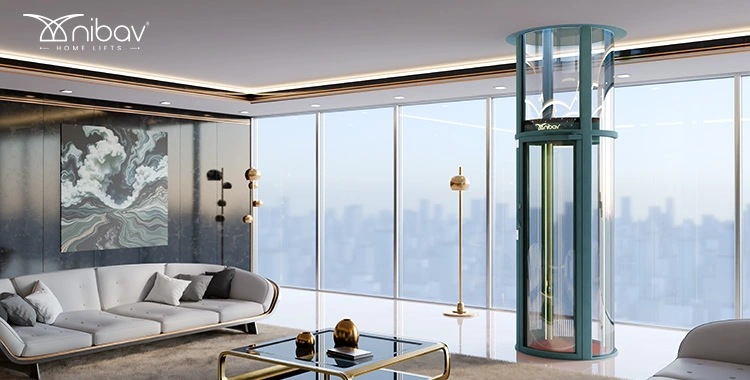
Shaftless home elevators are compact, wheelchair-friendly lift solutions designed for homes without requiring pits or machine rooms. Options like Nibav Malaysia’s air-driven elevators provide easy installation, minimal space usage, and reliable accessibility—making them ideal for modern homes.
Key Takeaways
- Shaftless home elevators are ideal for wheelchair accessibility in existing homes.
- No pit, shaft, or machine room required
- Installation can be completed in 24–48 working hours.
- Compact designs fit even space-constrained homes
- Nibav Malaysia offers air-driven, wheelchair-friendly solutions.
- Improves safety, independence, and long-term usability
Table of Contents
- What Are Shaftless Wheelchair-Friendly Home Elevators?
- Why Are Wheelchair Accessible Home Elevators Becoming Essential?
- How Do Shaftless Elevators Improve Life for Wheelchair Users?
- How Do Compact Wheelchair Home Lifts Work?
- What Makes a Home Elevator Truly Wheelchair-Friendly?
- How Does Nibav Malaysia Support Wheelchair Accessibility?
- Which Nibav Models Are Suitable for Wheelchair Users?
- How Much Space Do Wheelchair Home Elevators Require?
- How Much Does a Wheelchair-Friendly Home Elevator Cost?
- Traditional vs Shaftless Wheelchair Elevators
- What Makes Shaftless Elevators a Better Choice for Accessibility?
- Common Mistakes to Avoid
- Decision Guide: Choosing the Right Wheelchair Elevator
- Why Wheelchair-Friendly Elevators Are a Future Necessity
- Can Shaftless Elevators Support Long-Term Accessibility Needs?
- Final Thoughts
- FAQs
What Are Shaftless Wheelchair-Friendly Home Elevators?
Shaftless home elevators are compact lift systems designed to provide accessibility without requiring traditional infrastructure like shafts or pits. They are especially suitable for wheelchair users in residential spaces.
How They Work
- Installed directly on existing flooring
- Operate using air-driven or simplified lift systems
- Require minimal structural changes
Why They Matter for Accessibility
- Easy entry and exit for wheelchair users
- Eliminates dependence on stairs
- Provides safe and smooth movement between floors
Why Are Wheelchair Accessible Home Elevators Becoming Essential?
More homeowners are prioritising accessibility, especially for elderly family members and individuals with mobility challenges, making wheelchair-friendly home elevators a necessity.
Real Challenges in Homes
- Multi-floor living without accessibility
- Safety risks with stairs
- Limited space for traditional lifts
How Shaftless Elevators Solve This
- Compact footprint
- Easy installation in existing homes
- Designed for independent use
Real-Life Scenario
A family caring for an elderly member or wheelchair user can install a shaftless lift without redesigning their home, improving both safety and independence.
How Do Shaftless Elevators Improve Life for Wheelchair Users?
Shaftless wheelchair-friendly home elevators allow users to move independently between floors without assistance, improving safety, comfort, and daily convenience.
Everyday Challenges Without a Lift
- Dependence on others to move between floors
- Risk of falls or injuries on stairs
- Limited access to parts of the home
How These Elevators Solve It
- Independent mobility – move freely without help
- Safe navigation – eliminates stair-related risks
- Full home access – every floor becomes usable
Real-Life Impact
Imagine living in a two-storey home but being restricted to just one floor.
With a wheelchair-accessible elevator:
- You regain full control of your space.
- Daily tasks become easier
- Your home becomes truly accessible.
Why Nibav Makes This Better
- Smooth, jerk-free rides for comfort
- Spacious cabins (Series V Max) for wheelchair use
- Easy entry without structural barriers
This is not just convenience — it’s independence and dignity.
How Do Compact Wheelchair Home Lifts Work?
Compact wheelchair home lifts use advanced technologies such as pneumatic (air-driven) systems to provide smooth, safe movement without heavy machinery.
Step-by-Step Functionality
- Air pressure lifts the cabin upwards.
- Controlled airflow ensures smooth descent
- Gravity-assisted lowering during power failure
Why This Is Ideal for Wheelchair Users
- Smooth, jerk-free movement
- Reliable safety systems
- Low maintenance requirements
What Makes a Home Elevator Truly Wheelchair-Friendly?
A truly wheelchair-accessible home elevator is not just about size—it must ensure safe entry, smooth operation, and ease of use for independent mobility.
Key Features to Look For
- Wide door opening for easy wheelchair entry
- Spacious cabin design to allow comfortable positioning
- Low or zero threshold entry for smooth access
- Simple controls accessible from a seated position
Why Nibav Fits This Requirement
Nibav’s larger models, like Series V and Series V Max, are designed with the following:
- Panoramic cabins for better visibility
- Smooth, jerk-free movement
- Easy entry without complex structural barriers
Real Insight
Many lifts claim to be accessible, but without proper cabin space and entry design, they fall short.
True accessibility is about comfort, safety, and independence—not just installation.
How Does Nibav Malaysia Support Wheelchair Accessibility?
Nibav Malaysia offers air-driven vacuum elevators designed for compact spaces while supporting accessibility needs, including wheelchair-friendly configurations.
Key Nibav Features
- No pit, shaft, or machine room
- Self-supporting structure
- Installation within 24–48 working hours
- Runs on single-phase power
- Panoramic design for visibility and comfort
Accessibility Benefits
- Easy entry for wheelchair users
- Safe and smooth ride
- Designed for everyday convenience
Which Nibav Models Are Suitable for Wheelchair Users?
Nibav offers multiple models, but larger cabin variants are better suited for wheelchair accessibility.
Series III (Compact Option)
- Suitable for small spaces
- Ideal for limited usage
- Not ideal for full wheelchair access
Series IV (Improved Comfort)
- Larger cabin than Series III
- Better usability for mobility support
- Suitable for moderate accessibility needs
Series V & Series V Max (Best for Wheelchair Accessibility)
- Spacious cabin design
- Supports wheelchair entry
- Ideal for long-term accessibility planning
Real Insight
All models share retrofit advantages, but Series V Max is the most suitable for full wheelchair use due to its larger cabin size.
How Much Space Do Wheelchair Home Elevators Require?
Direct Answer: Shaftless wheelchair elevators require minimal space, starting from approximately 1000 mm, with larger models requiring around 1400 mm.
Space Breakdown
- Entry models: ~1000 mm
- Larger models: ~1430 mm
- No additional structural space required
Where They Can Be Installed
- Living room corners
- Staircase voids
- Open areas
How Much Does a Wheelchair-Friendly Home Elevator Cost?
The home elevator cost depends on size, model, and features, with compact options starting lower and larger accessibility-focused models costing more.
Cost Factors
- Cabin size (wheelchair compatibility)
- Number of floors
- Customisation
Value Insight
Instead of focusing only on cost, consider:
- Installation savings
- Maintenance cost
- Long-term usability
Traditional vs Shaftless Wheelchair Elevators
| Feature | Traditional Elevators | Vacuum Elevators (Nibav) |
| Shaft Required | Yes | No |
| Pit Required | Yes | No |
| Installation Time | Weeks | 4–5 working days |
| Space Requirement | High | Minimal |
| Accessibility | Limited | High |
What Makes Shaftless Elevators a Better Choice for Accessibility?
Shaftless elevators are designed specifically for homes, making them more practical, compact, and accessible compared to traditional systems.
Key Advantages
- Easy installation
- Compact design
- Lower maintenance
- Better accessibility
Common Mistakes to Avoid
- Choosing lifts without checking cabin size
- Ignoring wheelchair accessibility needs
- Focusing only on price
- Not planning for future requirements
Decision Guide: Choosing the Right Wheelchair Elevator
Ask Yourself
- Do I need full wheelchair access?
- Do I have limited space?
- Do I want minimal construction?
Smart Insight
Choose a solution that balances:
- Space
- Accessibility
- Long-term usability
Why Wheelchair-Friendly Elevators Are a Future Necessity
With ageing populations and evolving home designs, accessibility is becoming a core requirement rather than an option.
Long-Term Benefits
- Improves independence
- Enhances safety
- Increases property value
Can Shaftless Elevators Support Long-Term Accessibility Needs?
Yes, shaftless home elevators are designed to support long-term mobility needs, making them ideal for ageing-in-place and future-ready homes.
Why This Matters
Accessibility needs often evolve over time:
- Temporary mobility challenges
- Ageing family members
- Long-term lifestyle planning
How Nibav Supports Future Needs
- Larger models (Series V Max) support wheelchair use.
- Minimal maintenance ensures long-term reliability
- Easy operation for users of all ages
Future-Proofing Your Home
Installing a shaftless elevator today means the following:
- No need for future renovations
- Improved independence for years to come
- A home that adapts to changing needs
Final Thoughts
Accessibility is no longer optional—it’s essential for modern homes.
With shaftless home elevators and compact wheelchair home lifts, homeowners can create a safer, more inclusive living environment without major construction.
Nibav Malaysia’s solutions stand out by offering true accessibility, minimal space requirements, and fast installation, making them a smart choice for anyone planning a future-ready home.
FAQs
1. What are wheelchair accessible home elevators?
Wheelchair-accessible home elevators are lifts designed with enough space and safety features to accommodate wheelchair users. They provide easy and independent movement between floors in residential homes.
2. Are shaftless home elevators suitable for wheelchair users?
Yes, shaftless home elevators can be designed to support wheelchair access, especially larger models like Nibav Series V Max. They offer easy entry, smooth operation, and require no structural changes.
3. How much space is needed for a wheelchair home lift?
Most compact lifts start from around 1000 mm, but wheelchair-friendly models typically require more space, around 1400 mm. This allows comfortable entry, turning, and safe usage.
4. How much does a wheelchair home elevator cost?
Costs vary depending on size, floors, and customisation, with larger accessibility-focused models being priced higher. However, shaftless lifts reduce installation and maintenance costs significantly.
5. Which is the best home elevator for wheelchair users?
Nibav Series V Max is considered one of the best options due to its spacious design and retrofit-friendly installation. It combines accessibility, safety, and modern design.