
 By Nadia Khalis on August 10, 2026 at 8:28 am |



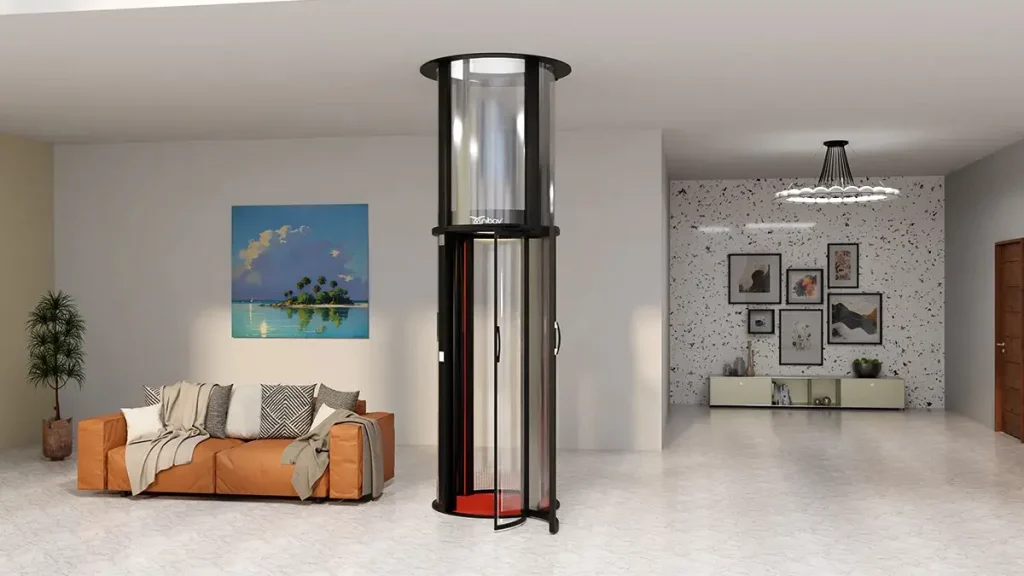
Indoor Lift for Home: Everything You Need to Know
You love your two-storey terrace house, but the stairs are becoming a genuine daily obstacle, whether it’s an ageing parent, a bad knee, or simply the hassle of hauling groceries up every week. The problem is, most homeowners assume an indoor lift for home use needs a spare room’s worth of space they simply don’t have, and that assumption stops the conversation before it even starts.
That assumption gets more frustrating the more you research it. Older lift technologies really did require a dedicated shaft, a machine room, and a pit dug into the ground floor, none of which is realistic in a typical Malaysian terrace or link house with a tight footprint. Faced with that, many homeowners give up on the idea entirely and resign themselves to years of struggling with the stairs.
The good news is that modern indoor lifts have solved exactly this problem. A compact home lift built on self-supporting, air-driven technology can fit into a stair void or unused corner with as little as one square metre of clear floor space, no machine room and no pit required. This guide covers everything you need to know before choosing one for your home.
Table of Contents
- What Makes a Small Home Lift Different From a Traditional Elevator
- Indoor Lift for Home Layouts: Where It Actually Fits
- Home Lift Price: What Actually Drives the Cost
- Compact Home Lift Installation: What to Expect on Site
- Why Nibav Is a Leading Choice for Indoor Home Lifts in Malaysia
- What Sets Nibav’s Compact Lifts Apart
- Frequently Asked Questions
What Makes a Small Home Lift Different From a Traditional Elevator
A traditional elevator was designed with commercial buildings in mind: a lift shaft built into the structure, a pit below ground level, and a separate machine room to house the motor and pump. None of that translates well into a residential floor plan, especially in Malaysian homes where every square metre already has a purpose.
A small home lift takes a fundamentally different approach. Using pneumatic, air-driven technology, the entire mechanism sits within a self-supporting cylindrical shaft that requires no pit and no machine room. The result is a lift compact enough to slot into a stair void, a corner of the living room, or even an outdoor-facing nook, while still comfortably carrying one to two passengers between floors.
This shift in mechanism also changes how the lift performs day to day. Because air pressure does the work rather than a motor-driven pulley system, a compact home lift tends to run quieter and smoother than older mechanical designs, an important detail if the lift will sit near a bedroom or living area rather than tucked away in a separate service zone.
Indoor Lift for Home Layouts: Where It Actually Fits
This is usually the first question homeowners ask, and reasonably so. Most compact home lift models need a clear floor footprint of roughly one to 1.4 square metres, depending on the cabin size you choose. That’s small enough to fit into spaces most homes already have sitting unused, including under a staircase, in a corner near an entryway, or within a redesigned utility area.
Because the lift is self-supporting, it doesn’t rely on your home’s existing walls for structural support, which gives installers real flexibility in positioning it wherever makes the most sense for your daily routine, rather than wherever a shaft happens to already exist.
This flexibility matters in Malaysian housing types specifically. Terrace and link houses in Klang Valley often have a narrow stair void that’s otherwise wasted space, while double-storey semi-detached homes in Penang or Johor Bahru frequently have a spare corner near the entryway that works well for an indoor lift installation without disturbing the rest of the layout. An experienced installer will assess your specific floor plan rather than applying a one-size-fits-all recommendation.
Home Lift Price: What Actually Drives the Cost
Home lift price varies mainly based on cabin size, number of floors served, and finish level, but a few consistent factors are worth understanding before you start collecting quotes. Larger cabin diameters, built to comfortably fit two passengers or a wheelchair user with an attendant, cost more than compact single-passenger models. Additional stops beyond a simple two-floor installation also add to the total.
What tends to surprise homeowners is how much civil work affects the final number. Because a compact, self-supporting home lift needs no pit and no machine room, the home lift price you’re quoted is largely the equipment and a straightforward installation, rather than a number inflated by weeks of structural construction. Always ask whether a quote includes site preparation, delivery, and after-sales servicing, so you’re comparing full costs rather than a stripped-down base price.
It’s also worth asking about ongoing running costs, not just the upfront home lift price. Because compact air-driven lifts draw power mainly while ascending and use gravity to descend, monthly electricity costs tend to be modest, comparable to running a large household appliance rather than a significant addition to your utility bill.
Compact Home Lift Installation: What to Expect on Site
Installation for a compact home lift is refreshingly straightforward compared to traditional systems. Most sites need only a flat, level floor, a single-phase power point, and basic finishing work around the shaft once it’s in place. There’s no excavation, no waterproofing for a pit, and no need to build a separate room for machinery.
Because the components arrive pre-engineered and largely pre-assembled, most installations are completed within four to five working days once the site is ready. That’s a dramatic difference from the weeks or months a traditional elevator installation would demand, and it means far less disruption to your household during the process.
For strata and gated community residents, it’s worth checking with your management corporation about approval requirements before installation begins, even though a self-supporting lift’s structural impact is minimal compared to a traditional elevator requiring a pit and machine room.
Why Nibav Is a Leading Choice for Indoor Home Lifts in Malaysia
Nibav’s range was purpose-built around exactly this problem: fitting a genuine, safe indoor lift into homes that were never designed with one in mind. Every model is self-supporting, TÜV NORD certified, and manufactured under ISO-certified quality processes, so the compact footprint doesn’t come at the expense of recognised safety standards.
With a local experience centre in Kuala Lumpur and installations completed in over 10,000 homes, Nibav gives Malaysian homeowners a chance to see and test a compact home lift in person before deciding, rather than relying on a brochure alone.
What Sets Nibav’s Compact Lifts Apart
Nibav’s smaller cabin models, including the Series III range, are engineered specifically for tight Malaysian floor plans without compromising on safety or comfort. A screwless, panoramic polycarbonate shell brings in natural light despite the compact footprint, while precision landing technology, automatic emergency descent, and triple-layer door lock safety come standard across every model, not as costly upgrades.
With installation typically completed in four to five working days and over 14 colour and finish options to match any interior, a Nibav indoor lift is designed to feel like a natural part of your home rather than an obvious retrofit.
Frequently Asked Questions
How much floor space does an indoor lift for home use actually need?
Most compact home lifts require roughly one to 1.4 square metres of clear floor space, small enough to fit into a stair void, corner, or repurposed utility area in most Malaysian homes.
What is the typical home lift price in Malaysia?
Home lift price depends on cabin size, number of floors, and finishes, but self-supporting compact lifts are generally more affordable overall than traditional elevators once civil work is factored in.
Can a small home lift be installed in an existing house without major renovation?
Yes. Because compact home lifts are self-supporting and need no pit or machine room, most existing Malaysian homes can accommodate one with minimal structural changes.
How long does it take to install a compact home lift?
Most installations are completed within four to five working days once the site is ready, compared to weeks or months for a traditional elevator requiring pit excavation.
Is an indoor lift for home use safe for elderly family members?
Yes, provided the model includes standard safety features such as automatic emergency descent, precision floor levelling, and door lock interlocks, all of which come standard on certified home lift models.

Sheikh Ismail
Excellent guide for anyone looking for an indoor lift in Malaysia. The details about space requirements, installation and safety make the topic much easier to understand.
Rachel Lim
I appreciate how the article explains both the benefits and installation considerations. Definitely useful for homeowners planning future renovations.
John Wesley
The article provides a good overview of what homeowners should check before installing an indoor lift. Very informative and practical.
Zainab Ali
I found the FAQ section particularly useful. It gives straightforward answers to common questions about space, installation and safety.
Jessica Wong
A clear and easy-to-understand guide. The comparison between traditional elevators and compact home lifts was very useful.