
 By Nadia Khalis on August 24, 2026 at 11:18 am |



Glass Home Elevator vs Conventional Home Lifts: Key Differences Explained
You’ve pictured your villa’s staircase replaced with something that actually adds to the design of your home, not something bolted on as an afterthought. Then you start comparing options and every listing seems to blur together — boxy shafts, unclear cabin materials, and no real sense of how different a glass home elevator actually looks and feels compared to a conventional home lift. That confusion often leads homeowners to default to whatever’s cheapest, without realising how much daily experience varies between the two.
This guide breaks down the real differences — in design, space requirements, and cost — between glass, panoramic elevator designs and conventional boxed lift systems, so you can choose based on what actually matters for your home.
Table of Contents
- Who Should Care About This Comparison
- What Actually Defines a Glass Home Elevator
- Conventional Home Lifts: Where They Still Make Sense
- Villa Elevator Considerations: Design as Part of the Investment
- Residential Home Lift Design: What’s Changed in Recent Years
- Cost and Practical Differences to Weigh
- Nibav Home Lifts’ Panoramic Design Standard
- Why a Villa Elevator from Nibav Home Lifts Fits Design-Forward Homes
- Frequently Asked Questions
Who Should Care About This Comparison
This comparison is most relevant for:
- Villa and bungalow owners across Malaysia who want their elevator to complement, not clash with, their home’s architecture
- Homeowners undergoing a renovation who have the flexibility to choose cabin style rather than defaulting to whatever fits an existing shaft
- Buyers comparing a panoramic lift for home use against a traditional enclosed cabin, unsure whether the visual upgrade is worth any cost difference
- Anyone researching a villa elevator specifically for a design-forward, open-plan home
What Actually Defines a Glass Home Elevator
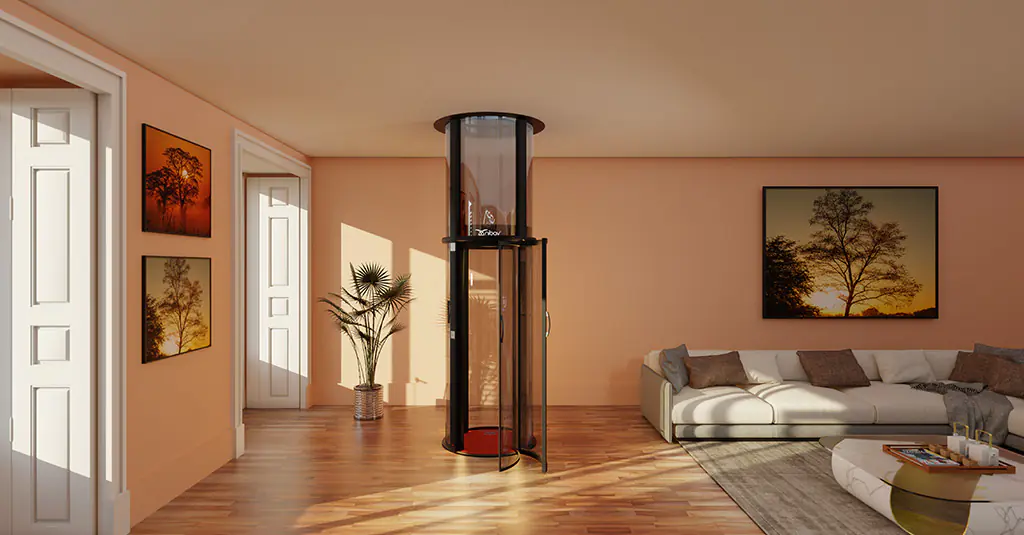
A glass home elevator uses a transparent or semi-transparent shaft and cabin, typically constructed from high-strength polycarbonate rather than traditional metal panelling. This creates a genuinely open, panoramic ride, letting natural light pass through the shaft and giving occupants a full view of their surroundings during travel, rather than being enclosed in a solid box.
Beyond aesthetics, the material itself carries practical advantages. Polycarbonate used in panoramic lift for home designs is considerably stronger than standard glass, while still allowing the transparency that makes the cabin feel spacious despite its compact footprint.
Conventional Home Lifts: Where They Still Make Sense
Conventional, fully enclosed home lifts aren’t obsolete — they still suit specific situations well:
- Homes where the lift will sit in a utility area or back stairwell, away from main living spaces where visual design matters less
- Budget-conscious installations where a fully panoramic cabin isn’t a priority
- Retrofits into very tight spaces where a solid-panel design happens to be the only available configuration for that particular footprint
The trade-off is largely visual and experiential rather than functional — conventional lifts generally offer comparable safety and reliability to glass alternatives, just without the open, airy feel.
Villa Elevator Considerations: Design as Part of the Investment
For villa owners specifically, an elevator often sits in a genuinely visible part of the home — a central staircase void, an entry hall, or a feature wall near the living area. In these settings, a villa elevator becomes part of the architectural statement, not just a mobility feature tucked out of sight.
A panoramic, glass-shaft design tends to suit this positioning far better than a conventional boxed lift, since it maintains sightlines through the space rather than interrupting them. Homeowners investing in premium finishes throughout a villa often find the added visual openness of a glass cabin justifies the modest cost difference compared to a conventional model.
Residential Home Lift Design: What’s Changed in Recent Years
What’s often labelled a residential home lift today typically combines the transparency of a glass shaft with additional design detailing — ambient lighting, custom cabin finishes, and door styles that avoid the industrial look older lift systems carried. This shift reflects a broader change in how homeowners view a lift: not as a purely functional add-on, but as a feature that should feel intentional within the home’s overall interior design.
For Malaysian homeowners renovating or building new, this matters most when the lift sits in a prominent location. If it’s tucked away in a service area, the design upgrade matters less than the functional footprint and cost.
Cost and Practical Differences to Weigh
Choosing between a glass and conventional model isn’t purely aesthetic — a few practical factors matter too:
- Installation footprint: Both styles are typically self-supporting and require no pit or machine room, so space requirements are broadly similar
- Maintenance: Polycarbonate panels used in panoramic designs are engineered for durability and don’t require the specialised upkeep some assume glass surfaces need
- Cost difference: Panoramic, glass-shaft models generally carry a modest premium over fully enclosed conventional cabins, though the gap has narrowed considerably as the design has become standard across most manufacturer ranges
Nibav Home Lifts’ Panoramic Design Standard
Nibav Home Lifts builds its panoramic cabins from high-strength polycarbonate, giving villa owners the open, glass-like ride discussed throughout this comparison without sacrificing the durability a conventional enclosed lift is known for. It’s a big part of why Nibav Home Lifts is frequently the reference point homeowners use when comparing a glass home elevator to older, boxed designs.
Why a Villa Elevator from Nibav Home Lifts Fits Design-Forward Homes
For villa owners weighing a residential home lift against a conventional model, Nibav Home Lifts offers the panoramic option as a standard rather than a rare upgrade, making it easier to keep an elevator in a visible part of the home feeling intentional rather than purely functional.
Frequently Asked Questions
- Is a glass home elevator safer than a conventional home lift?
Both offer comparable safety standards. Glass models use high-strength polycarbonate rather than standard glass, providing similar durability to conventional enclosed cabins.
- Does a glass home elevator cost more than a conventional model?
Typically yes, though the difference is generally modest, since panoramic designs have become a standard offering across most manufacturer ranges rather than a rare premium feature.
- Is a villa elevator required to be glass or panoramic?
No, but many villa owners choose a panoramic design specifically because the elevator sits in a visible part of the home where design consistency matters.
- Does a glass home elevator need more space than a conventional lift?
No. Both styles are typically self-supporting and require similar footprint and installation space, since the difference is in the panel material rather than the overall structure.
- Is polycarbonate as durable as it looks in a panoramic lift for home use?
Yes. The polycarbonate used in these cabins is considerably stronger than standard glass and is engineered specifically for long-term residential use without special maintenance requirements.

Aiman Hakim
Very informative comparison. I like how the article explains the difference between glass and conventional home lifts in terms of design, space and practicality.
Daniel Lim
The panoramic design looks like a beautiful addition to a modern home. This article helped me understand why glass elevators are becoming popular.
Omar Saeed
I found the explanation about polycarbonate especially useful. It is good to know that the transparent cabin can provide a modern look while remaining durable.
Nurhaliza
A well-written article for homeowners considering a lift. The comparison makes it much easier to understand which features are important.
Yusuf Khan
I really liked the section about space requirements. Knowing that a panoramic home lift can have a compact footprint is helpful for homeowners with limited space.
Hafiz Zulkifli
The explanation of conventional lifts was balanced and easy to understand. It gives homeowners a good starting point before making a decision.
Kumar
The article provides a clear explanation without making the technical details too complicated. Very helpful for someone researching residential elevators.