 By Nadia Khalis on November 19, 2026 at 8:41 am |


How Glass Lifts Add Value To Stylish Homes
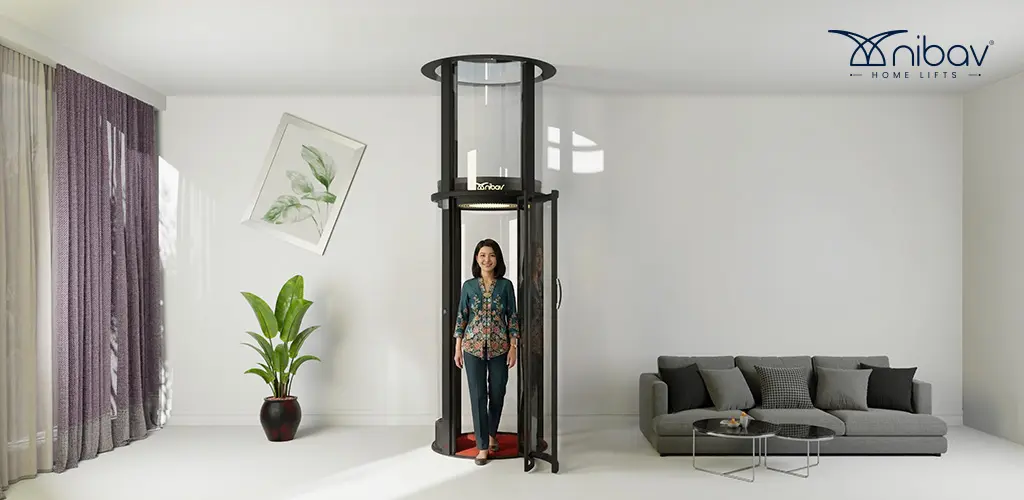
A beautifully designed home is shaped by more than furniture, finishes, and décor. Every architectural element contributes to how the space looks and feels—and a conventional elevator can sometimes appear more like a functional necessity than part of the design. This is where modern glass lifts are changing the way homeowners think about vertical mobility. Their transparent, contemporary design can help maintain visual openness while turning the lift itself into an architectural feature.
For homeowners looking to combine accessibility with aesthetics, home lifts can offer more than convenient movement between floors. A well-designed glass elevator can complement open-plan interiors, allow greater visual connection between levels, and create a distinctive focal point in spaces such as living areas, foyers, or staircase voids. Nibav Lifts also positions its modern glass lifts around the combination of design, space efficiency, safety, and everyday convenience.
But choosing a luxury glass lift is not simply about appearance. Factors such as the home’s layout, available space, lift technology, customisation, safety features, and overall home lift price all play a role in determining whether the solution is right for the property. This guide explores how glass lifts can add value to stylish homes and what homeowners should consider before making the investment.
Table of Contents
- Why Glass Home Lifts Change How A Home Feels?
- What Does “Glass” In Glass Lifts Actually Mean?
- What Details Make Nibav Lifts’ Luxury Glass Lift A Design?
- What Is The Price Of A Glass Home Lift, And What Factors Affect The Price?
- Where Should a Nibav Lifts Glass Lift Go, and Does It Add Property Value?
- FAQs
Why Glass Home Lifts Change How A Home Feels?
The functional argument for a lift is accessibility. The design argument is entirely different, and it comes down to three things.
Sightlines survive: A solid shaft terminates a view. A transparent cylinder lets it continue. In an open-plan ground floor, that is the difference between a lift that divides the space and one that sits within it.
Light keeps moving: Placed in a stair void or against a window, a clear cabin passes daylight between levels instead of blocking it. Homes that gain a solid shaft almost always lose light somewhere.
Nobody feels enclosed: A 360-degree panoramic cabin removes the boxed-in sensation of a conventional lift car. That is a comfort point for elderly passengers and for anyone prone to claustrophobia, and it is the reason glass lifts get used casually rather than treated as medical equipment.
There is a fourth, subtler effect. A transparent lift moving through a double-height space is visually interesting in a way a stair is not. Handled well, it becomes the thing visitors notice, which is the opposite of what most people expect when they add accessibility to a home.
What Does “Glass” In Glass Lifts Actually Mean?
Worth being precise here, because the distinction favours you as a buyer.
The panoramic panels in a Nibav Lifts cabin and shaft are reinforced polycarbonate, not architectural glass. Polycarbonate of this grade is rated at roughly 250 times stronger than conventional glass. It gives the same clarity and the same visual effect, without the shatter behaviour of a glass panel in a domestic setting where children and mobility aids are in daily use.
The structure around it is aerospace-grade aluminium, combined with galvanised steel. That combination is what allows the shaft to be self-supporting: it carries its own load, stands on a finished floor, and needs no pit, no machine room and no structural work. It is also what keeps the lift light enough to install without reinforcing anything.
So a glass lift is not a glass box hung inside a concrete shaft. It is a self-carrying transparent cylinder, which is precisely why it can be placed where a conventional lift cannot.
What Details Make Nibav Lifts’ Luxury Glass Lift A Design?
Transparency alone is not enough. If the structure is full of visible screws, brackets and sensor housings, a clear enclosure just exposes the hardware. The detailing is what separates a lift that looks designed from one that looks installed.
ZeroTrace™: conceals every screw, bolt and hinge behind sculpted panels, producing a continuous, screw-free surface across the cabin and shaft. In a transparent structure this matters far more than it would behind a solid door.
Frameless aluminium doorways: give uninterrupted views at the entry point rather than a metal frame cutting across the panel.
Concealed base plate and hidden sensors: keep the mechanical components and safety sensors out of sight, so the lower third of the lift reads as clean as the cabin.
SkyMark™: turns the ceiling into an illuminated feature rather than a service panel, and illuminated pillars with ambient lighting let the structure glow softly at night instead of going dark and inert.
HeartLine™: allows laser engraving inside the cabin wall, which is the one detail that turns a product into something specific to your house.
Grande: adds 170 mm of cabin and door height for taller users or for rooms where the proportions need it.
And the finishes are where a glass lift stops being generic. Series IV and Series V offer 24+ colour and texture options; Series III offers 14+.
| Finish edition | Options | Blends well with |
| Standard | Ashton Grey, Cream White, Midnight Black, Pure White | Minimal, monochrome and Scandinavian interiors |
| Textured | Beige, Cool Blue, Flint Grey, Flora Blue, GL Green, Glossy Brown, Grey, Maroon | Warmer, layered palettes where a flat colour would look stark |
| Metallic | Bronze, Dark Grey, Gold, Sparkling Metallic | Contemporary luxury schemes with brass or blackened metal joinery |
| Hydro Matt | Carbonic Fibre, Mahogany Brown, Russet Brown, Umber Brown | Timber-heavy interiors; matt finish avoids competing with the grain |
| Hydro Glossy | Carbonic Fibre, Mahogany Brown, Russet Brown, Umber Brown | Formal, high-shine spaces with stone or lacquered surfaces |
The practical advice: match the shaft columns to your joinery or window frames rather than to your walls. The columns are the only opaque part of the structure, so matching them to the nearest metalwork is what makes the lift disappear into the scheme.
What Is The Price Of A Glass Home Lift, And What Factors Affect The Price?
Published starting prices across the range for Home Lifts are as follows:
- Series III Standard — MYR 89,900, 749 mm cabin, 210 kg, 1,010 mm clear space
- Series III Max — MYR 119,900, 1,160 mm cabin, 240 kg, 1,430 mm clear space
- Series IV Standard — MYR 119,900, 830 mm cabin, 210 kg, 1,000 mm clear space, 72% ROS
- Series IV Max — MYR 146,900, 1,240 mm cabin, 240 kg, 1,430 mm clear space, 77% ROS
- Series V Standard — MYR 119,900, 830 mm cabin, 210 kg, 72% ROS
- Series V Max — MYR 149,900, 1,240 mm cabin, 240 kg, 77% ROS
Stops affect the total. On the published Series V ladder, G+1 is MYR 119,900, G+2 is MYR 134,900 and G+3 is MYR 149,900, so each additional stop adds roughly MYR 15,000.
For a design-led home, the meaningful step is Series IV to Series V. Both use the same 830 mm cabin and the same 1,000 mm footprint, so you are not buying space. You are buying AutoGlide™ sensor-based automatic doors, GlideWide™ widest-in-class cabin doors, the VividTouch™ touchscreen with integrated SmartConnect™ communication, TexturedMetallic™ finishes as standard, and CoreShield™, a 25-year warranty on the motor and vacuum seal.
Because there is no pit, shaft or machine room, there is no separate construction contract, which on a conventional lift is frequently the largest single cost.
Where Should a Nibav Lifts Glass Lift Go, and Does It Add Property Value?
A self-supporting glass lift can occupy positions a conventional lift cannot. The ones that work best in stylish homes:
The stairway: Dead space that already runs the full height of the house. A transparent cylinder inside a stair well is the single most effective placement, visually and practically.
A double-height space: This is where a glass lift stops being a utility and becomes an architectural element, visible in motion across two levels.
Against a window or lightwell: Borrows daylight and keeps the shaft from reading as a solid mass.
A corner of the living or dining area: Works when the footprint is genuinely small: 1,000 mm clear space returns an 830 mm cabin at 72% ROS.
Every model reaches up to 4 stops (G+3) with a maximum travel height of 13,500 mm, and installation typically completes in 4 to 5 working days on a prepared site.
Nibav Lifts home elevators are TÜV NORD certified, engineered to comply with European safety standards, and manufactured under an ISO-certified quality management system.
FAQs
1. What is a glass lift, and is it actually made of glass?
A glass lift is a home lift with a transparent panoramic cabin and shaft. Nibav Lifts uses reinforced polycarbonate rated around 250 times stronger than conventional glass, framed in aerospace-grade aluminium, giving the same clarity with far better impact behaviour in a home. The structure is self-supporting, so it needs no pit or machine room.
2. What is the home lift price for a glass lift in Malaysia?
Nibav Lifts glass lifts start at MYR 89,900 for the Series III Standard, with the Series III Max at MYR 119,900, Series IV Standard at MYR 119,900, Series IV Max at MYR 146,900, Series V Standard at MYR 119,900 and Series V Max at MYR 149,900. Prices exclude applicable taxes and vary with stops, cabin size and finishes.
3. How much space does a luxury glass lift need?
A Nibav Lifts Series IV Standard needs 1,000 mm of clear space for an 830 mm cabin at 72% ROS, and the Series III Standard needs 1,010 mm for a 749 mm cabin. The larger wheelchair-accessible variants need 1,430 mm for cabins of 1,160 mm or 1,240 mm at 77% ROS.
4. Can a glass home lift be customised to match my interior?
Yes. Nibav Lifts offers 24+ colour and texture options on Series IV and V and 14+ on Series III, across Standard, Textured, Metallic, Hydro Matt and Hydro Glossy editions, plus ambient lighting, illuminated pillars, SkyMark™ ceiling detailing and HeartLine™ cabin engraving.
5. Do glass lifts need major construction work?
No. Nibav Lifts glass lifts are self-supporting and require no pit, no machine room and no structural modification. Modular sections pass through standard doorways, and installation typically completes in 4 to 5 working days on a prepared site.