 By Nadia Khalis on June 29, 2026 at 6:57 am |



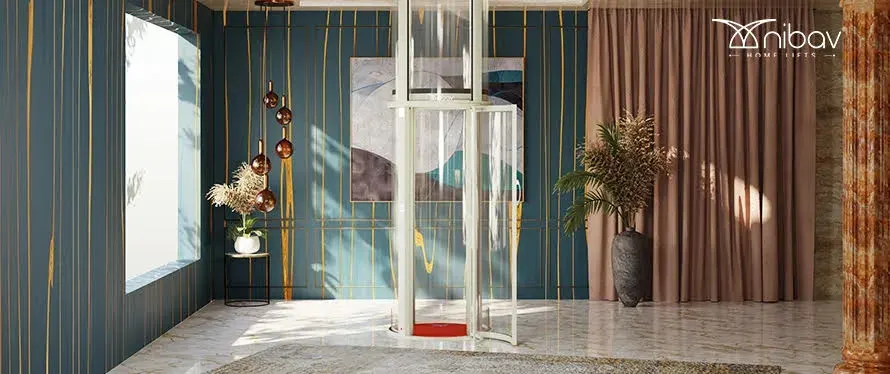
Mini Home Elevators in Malaysia: Pricing & Installation Guide
The phrase ‘home elevator‘ still conjures the same image in most Malaysian homeowners’ minds: a large box installed in a purpose-built shaft, surrounded by months of construction, and reserved for homes significantly larger and more expensive than their own. This image is holding a lot of families back from a solution that is genuinely within their reach.
The reality in 2026 is that mini home elevators — compact, air-driven, and self-supporting — have made residential vertical mobility accessible to a much wider range of Malaysian homeowners than ever before. The smallest models fit in 1,000 mm of clear space. They install in 4 to 5 days. They require no pit and no machine room. And they start from a price point that competes with other major home improvements like kitchen renovations or solar panel installations.
This guide gives you the complete picture — accurate pricing, realistic installation expectations, the key features that matter, and the questions you should ask before committing to any supplier. Whether you are looking for a first elevator for an elderly parent or a compact upgrade for a growing family home, this is the reference you need.
Table of Contents
- What Is a Mini Home Elevator and How Does It Differ from Standard Models?
- Home Elevator Price in Malaysia: Complete 2026 Guide
- Step-by-Step: How Mini Home Elevator Installation Works in Malaysia
- Key Features to Look for in a Mini Home Elevator
- Mini Home Elevator vs Standard Home Elevator: Which Is Right for You?
- Frequently Asked Questions
What Is a Mini Home Elevator and How Does It Differ from Standard Models?
The term ‘mini home elevator’ in the Malaysian market typically refers to compact air-driven lifts with a Standard cabin size — an internal diameter of 749 mm to 830 mm, designed for 1 to 2 passengers. These differ from ‘Max’ models (1,240 mm internal diameter) in three key ways:
- Smaller footprint: Standard models require 1,000 mm to 1,010 mm of clear space versus 1,430 mm for Max models — a significant advantage in genuinely compact homes.
- Lower home elevator price: Standard models start from MYR 69,900* versus MYR 136,900* for Max configurations( Series IV Max) — a meaningful difference for budget-conscious buyers.
- Capacity: Standard models support 210 kg (approximately 2 to 3 passengers). Max models support 240 kg and are designed for wheelchair access with an attendant.
For homes where the primary users are ambulatory adults — including elderly residents who walk independently — a mini home elevator delivers everything needed at a significantly lower home elevator price than larger alternatives. Contact Nibav Home Lifts for more information on the available models and prices.
Home Elevator Price in Malaysia: Complete 2026 Guide
Pricing transparency matters when making a decision of this magnitude. Here is what Malaysian homeowners can expect to pay for small elevators for homes across the full Nibav range in 2026:
- Series III Standard (most affordable): From MYR 69,900* — 749 mm cabin, 210 kg, 4 stops, 14+ colour options, CE and TÜV NORD certified, full installation included.
- Series IV Standard (smart features): From MYR 109,900* — 830 mm cabin, AI and voice control, frameless doors, 24+ finish options.
- Series V Standard (premium): From MYR 119,900* (G+1) — auto-opening doors, HeartLine engraving, SkyMark ceiling, 25-year CoreShield warranty.
- Series III Max (affordable wheelchair access): From MYR 109,900* — 1,240 mm cabin, 240 kg capacity at entry-level pricing.
- Series IV Max (smart wheelchair access): From MYR 136,900* — wider cabin, smart features, voice control.
- Series V Max (luxury wheelchair access): From MYR 149,900* (G+3) — all premium features, widest cabin in class.
Critical note: all prices above include full installation. There are no additional costs for pit excavation, machine room construction, or structural reinforcement — because none are required. This distinguishes air-driven home elevator price from traditional hydraulic quotations, which must add MYR 50,000 to MYR 100,000 in civil construction to be comparable.
Step-by-Step: How Mini Home Elevator Installation Works in Malaysia
One of the most powerful advantages of compact air-driven elevators is the installation process. Here is exactly what happens from site assessment to first ride:
- Site feasibility assessment: A Nibav consultant visits your home, assesses the available space, confirms the ideal installation location, and provides a detailed, itemised proposal. This is carried out at no cost and with no obligation.
- Order confirmation and scheduling: Once confirmed, installation is scheduled at a time that suits the household. Typically installation takes just 4 to 5 working days.
- Floor opening preparation: The installation team cuts precise circular openings through the floor slabs at each level the lift will serve. This is a targeted, controlled process — not the heavy demolition associated with traditional elevator installation.
- Cylinder and cabin assembly: Pre-engineered modular components are transported through standard doorways and assembled on-site. No welding, no heavy fabrication. The process resembles sophisticated precision assembly rather than construction.
- Electrical connection: A standard 3.7 kVA single-phase power connection is made. No special electrical supply or dedicated circuit room is required in most cases.
- Safety testing and commissioning: All safety systems are fully tested — emergency descent, door sensors, overload protection, battery backup, communication system, and display functionality — before the lift is handed over.
- Homeowner briefing: The installation team walks through the lift’s operation, maintenance requirements, and emergency procedures with the homeowner before leaving.
Total elapsed time from first tool on site to handover: 4 to 5 working days. The home remains fully functional and inhabited throughout the entire process.
Key Features to Look for in a Mini Home Elevator
When comparing small elevators for homes in Malaysia, these features determine long-term satisfaction:
- Self-supporting structure: No external walls or beams needed to support the lift — the cylinder stands independently. This is fundamental for retrofit installations in existing homes.
- 360-degree panoramic glass cabin: Reinforced polycarbonate creates an open, light-filled experience that eliminates any sense of claustrophobia — important for elderly users and anxious passengers.
- Emergency descent without battery: The gravity-powered descent system lowers the cabin to the nearest floor during power cuts without requiring external power — more reliable than battery-dependent alternatives.
- TÜV NORD certification: International certification confirms independent testing against European safety standards — the appropriate benchmark for any home elevator in Malaysia.
- Low maintenance requirement: Air-driven lifts need no fluid changes, no lubrication, and minimal servicing — approximately 90% less maintenance than hydraulic alternatives.
- Customisation range: 14+ to 24+ colour and finish options depending on the model — ensuring the lift integrates with rather than disrupts the home’s interior design.
Mini Home Elevator vs Standard Home Elevator: Which Is Right for You?
The decision between a mini (Standard) and full-size (Max) configuration comes down to four factors:
- Daily users: If all regular users are ambulatory, a Standard model is sufficient. If a wheelchair user or assisted-mobility person uses the lift regularly, a Max model is necessary.
- Available floor space: Standard models need 1010 mm. Max models need 1,430 mm. If space is genuinely constrained, the Standard is the only viable option.
- Home elevator price budget: Standard models cost significantly less than Max configurations. For budget-constrained buyers, the Standard delivers full residential lift functionality at the most accessible price point.
- Future-proofing: If wheelchair access is a realistic future need — for ageing residents or potential future disability — investing in a Max model now avoids the cost of upgrading later.
Frequently Asked Questions
Q1: What is the cheapest mini home elevator in Malaysia?
The Nibav Series III Standard is the most affordable compact home elevator in the Nibav range, with prices starting from MYR 69,900. The quoted price primarily covers the lift unit, while final pricing may vary based on installation requirements, travel height, and customisation options. Since Nibav home lifts require no pit, machine room, or major structural modifications, homeowners can avoid many of the additional civil construction costs commonly associated with conventional elevators..
Q2: How much space does a mini home elevator need in Malaysia?
The most compact models require as little as 1010 mm (approximately 1 metre) of clear floor space. The external cylinder diameter is 933 mm — fitting into stair voids, hallway corners, and beside existing staircases in most Malaysian terrace homes.
Q3: How long does mini home elevator installation take?
Installation is completed in 4 to 5 working days on a prepared site. No pit excavation, no machine room construction, and no structural changes are required — the home remains fully functional throughout the process.
Q4: Is a compact home elevator safe for elderly users in Malaysia?
Yes. All models include emergency descent, triple-layer door locking, smart overload protection, 30-minute battery backup, child safety lock, and TÜV NORD certification — providing comprehensive protection for elderly and mobility-impaired users.
Q5: Can a mini home elevator increase my Malaysian property’s value?
Yes. A home elevator consistently adds resale value — particularly in the landed and semi-luxury residential segment. Buyers increasingly treat a home lift as a premium differentiator that justifies a higher asking price and attracts a broader buyer pool.